
Del i serien Fordham Series in Medieval Studies
Religious Women in Early Carolingian Francia
A Study of Manuscript Transmission and Monastic Culture
Inbunden, Engelska, 2014
939 kr
Beställningsvara. Skickas inom 5-8 vardagar. Fri frakt för medlemmar vid köp för minst 249 kr.
Religious Women in Early Carolingian Francia, a groundbreaking study of the intellectual and monastic culture of the Main Valley during the eighth century, looks closely at a group of manuscripts associated with some of the best-known personalities of the European Middle Ages, including Boniface of Mainz and his "beloved,"abbess Leoba of Tauberbischofsheim. This is the first study of these "Anglo-Saxon missionaries to Germany" to delve into the details of their lives by studying the manuscripts that were produced in their scriptoria and used in their communities. The author explores how one group of religious women helped to shape the culture of medieval Europe through the texts they wrote and copied, as well as through their editorial interventions.Using compelling manuscript evidence, she argues that the content of the women's books was overwhelmingly gender-egalitarian and frequently feminist (i.e., resistant to patriarchal ideas). This intriguing book provides unprecedented glimpses into the "feminist consciousness" of the women's and mixed-sex communities that flourished in the early Middle Ages.
Produktinformation
- Utgivningsdatum2014-05-01
- Mått152 x 229 x 30 mm
- Vikt682 g
- FormatInbunden
- SpråkEngelska
- SerieFordham Series in Medieval Studies
- Antal sidor368
- FörlagFordham University Press
- ISBN9780823256877
- UtmärkelserShort-listed for Wallace K. Ferguson Award 2015
Tillhör följande kategorier
Hoppa över listan

Mer från samma författare
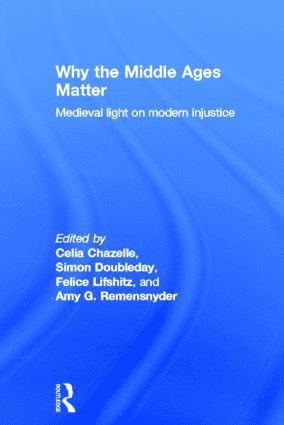
Why the Middle Ages Matter
Celia Chazelle, Simon Doubleday, Felice Lifshitz, Amy G. Remensnyder
Inbunden, 2011
2 929 kr
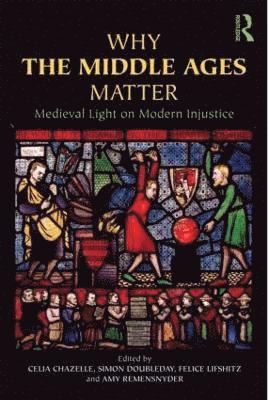
Why the Middle Ages Matter
Celia Chazelle, Simon Doubleday, Felice Lifshitz, Amy G. Remensnyder
Häftad, 2011
909 kr
Hoppa över listan
Mer från samma serie
Dante for the New Millennium
Teodolinda Barolini, Teodolinda Barolini, H. Wayne Storey
Inbunden, 2003
1 759 kr
Dante for the New Millennium
Teodolinda Barolini, Teodolinda Barolini, H. Wayne Storey
Häftad, 2003
769 kr
Hoppa över listan
Du kanske också är intresserad av
Dante for the New Millennium
Teodolinda Barolini, Teodolinda Barolini, H. Wayne Storey
Inbunden, 2003
1 759 kr
Law, Justice, and Society in the Medieval World
Esther Liberman Cuenca, M. Christina Bruno, Anthony Perron
Inbunden, 2025
1 569 kr