
Private Lives, Public Deaths
Antigone and the Invention of Individuality
Häftad, Engelska, 2013
499 kr
Beställningsvara. Skickas inom 5-8 vardagar. Fri frakt för medlemmar vid köp för minst 249 kr.
Finns i fler format (1)
In Private Lives, Public Deaths, Jonathan Strauss shows how Sophocles' tragedy Antigone crystallized the political, intellectual, and aesthetic forces of an entire historical moment—fifth century Athens—into one idea: the value of a single living person. That idea existed, however, only as a powerful but unconscious desire. Drawing on classical studies, Hegel, and contemporary philosophical interpretations of this pivotal drama, Strauss argues that Antigone's tragedy, and perhaps all classical tragedy, represents a failure to satisfy this longing.To the extent that the value of a living individual remains an open question, what Sophocles attempted to imagine still escapes our understanding. Antigone is, in this sense, a text not from the past but from our future.
Produktinformation
- Utgivningsdatum2013-08-01
- Mått152 x 229 x 18 mm
- Vikt386 g
- FormatHäftad
- SpråkEngelska
- Antal sidor232
- FörlagFordham University Press
- ISBN9780823251339
Tillhör följande kategorier
Hoppa över listan




Mer från samma författare
Breast Cancer Biology for the Radiation Oncologist
Jonathan Strauss, William Small, Gayle E. Woloschak
Inbunden, 2015
1 449 kr
Breast Cancer Biology for the Radiation Oncologist
Jonathan Strauss, William Small, Gayle E. Woloschak
Häftad, 2016
1 019 kr
Hoppa över listan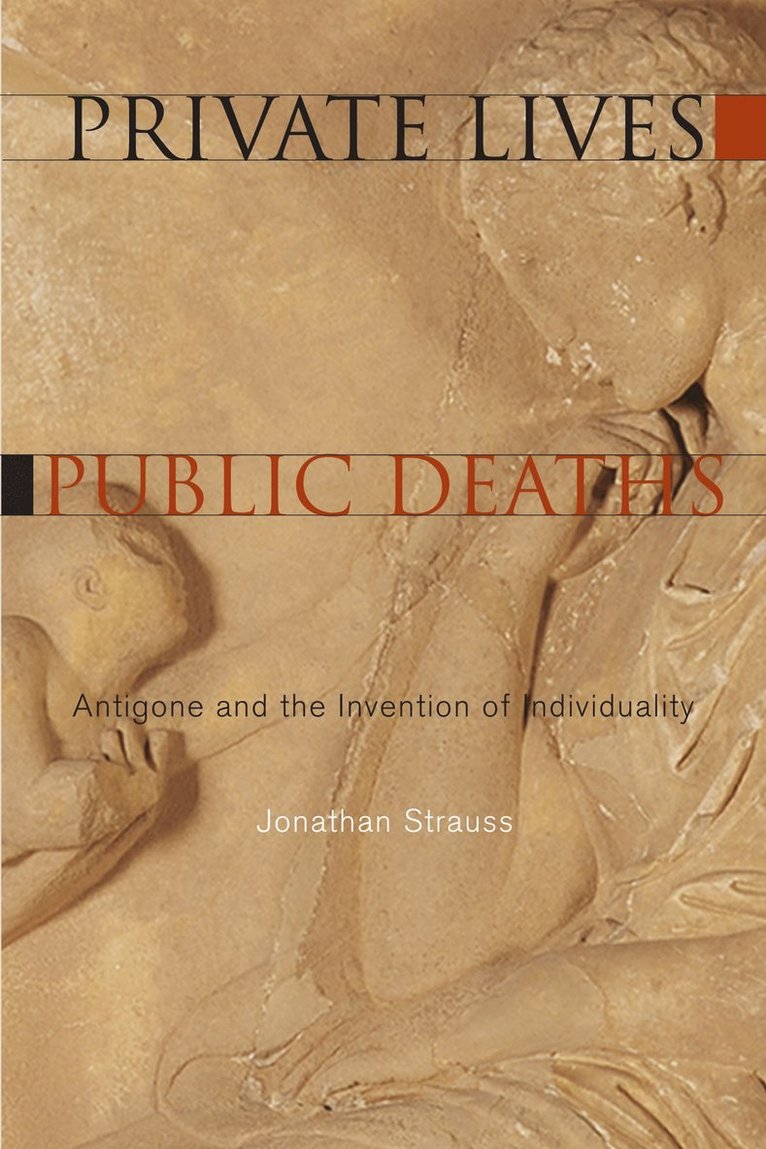


Du kanske också är intresserad av
Breast Cancer Biology for the Radiation Oncologist
Jonathan Strauss, William Small, Gayle E. Woloschak
Häftad, 2016
1 019 kr
Breast Cancer Biology for the Radiation Oncologist
Jonathan Strauss, William Small, Gayle E. Woloschak
Inbunden, 2015
1 449 kr
Del 1

- Nyhet
Del 1