
Del i serien Brill
Opening the Online Door to Academe
A Practical Guide to Doctoral Study Online and Beyond
Inbunden, Engelska, 2022
1 939 kr
Beställningsvara. Skickas inom 5-8 vardagar. Fri frakt för medlemmar vid köp för minst 249 kr.
Finns i fler format (1)
Our technologically advanced society has generated many rapid changes in higher education in recent years. These changes have been recently exacerbated by the global pandemic COVID-19. Educational institutions around the world have adapted to offering their programs by distance, usually via online computer platforms. While many levels of credentials already existed successfully online, the elite and difficult doctoral degree has remained largely traditional, a bricks-and-mortar program, requiring attendance and perhaps a major lifestyle transition for learners. COVID has changed and will continue to change that.This book explores the world of online learning and online doctoral study post-COVID and in the future. From “should I undertake this learning?” to how to choose a supervisor and manage the online research experience, using her years of experience and insight, the author has compiled a practical guide outlining not only how to successfully undertake online doctoral study but also how to wisely transfer that acquired online acumen beyond graduation, into the academic life. Newly-minted PhDs and EdDocs face a steep learning curve when entering the professorial life in the Ivory Tower of higher education. This down-to-earth, plain language, and often humorous text explores the pedagogical advantages of the online experience and their usefulness to the new academic hire. Current doctoral learners, both traditional and online, as those mulling future educational plans, and doctoral completers surveying higher education opportunities will benefit from the insight and advice in this very frank text.
Produktinformation
- Utgivningsdatum2022-06-02
- Mått155 x 235 x 10 mm
- Vikt369 g
- FormatInbunden
- SpråkEngelska
- SerieBrill
- Antal sidor132
- FörlagBrill
- ISBN9789004521209
Tillhör följande kategorier
Hoppa över listan

Mer från samma författare
Doctor of Nursing Practice Project: a Framework for Success
Katherine J. Moran, Rosanne Burson, Dianne Conrad
Häftad, 2023
1 459 kr
The Doctor of Nursing Practice Project
Dianne Conrad, Rosanne Burson, Katherine J. Moran
Häftad, 2028
1 649 kr
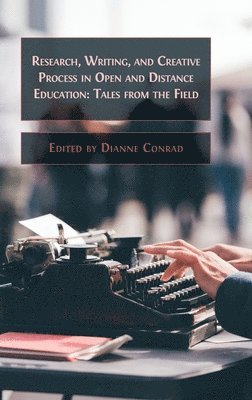
Research, Writing, and Creative Process in Open and Distance Education: Tales from the Field
Dianne Conrad
Häftad, 2023
469 kr
Research, Writing, and Creative Process in Open and Distance Education: Tales from the Field
Dianne Conrad
Inbunden, 2023
699 kr
Hoppa över listan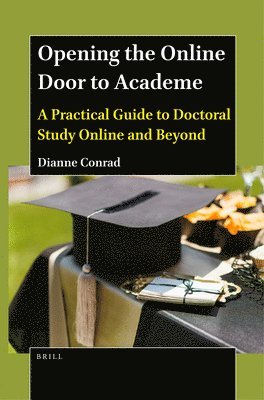

Du kanske också är intresserad av
Research, Writing, and Creative Process in Open and Distance Education: Tales from the Field
Dianne Conrad
Häftad, 2023
469 kr
The Doctor of Nursing Practice Project
Dianne Conrad, Rosanne Burson, Katherine J. Moran
Häftad, 2028
1 649 kr
Doctor of Nursing Practice Project: a Framework for Success
Katherine J. Moran, Rosanne Burson, Dianne Conrad
Häftad, 2023
1 459 kr
Research, Writing, and Creative Process in Open and Distance Education: Tales from the Field
Dianne Conrad
Inbunden, 2023
699 kr
- Nyhet
Del 11