
Del i serien Essays in Social Psychology
Nostalgia
A Psychological Resource
Häftad, Engelska, 2015
1 019 kr
Beställningsvara. Skickas inom 10-15 vardagar. Fri frakt för medlemmar vid köp för minst 249 kr.
Finns i fler format (1)
Nostalgia is a topic that most lay people are familiar with, but, until recently, few social scientists understood. Once viewed as a disease, nostalgia is now considered to be an important psychological resource. It involves revisiting personally cherished memories that involve close others. When people engage in nostalgia, they experience a boost in positive psychological states such as positive mood, feelings of social connectedness, self-esteem, self-continuity, and perceptions of meaning in life. Since nostalgia promotes these positive states, when people experience negative states (such as loneliness or meaninglessness), they use nostalgia to regulate distress. This book explains in detail what nostalgia is, how views of it have changed over time, and how it has been studied by social scientists. It explores issues like how common nostalgia is and whether people differ in their tendency to be nostalgic. It looks at the triggers and inspiration for nostalgia, and the emotional states that are associated with it. Finally, the psychological, social, and behavioral effects of engaging in nostalgia are discussed.This volume provides the most comprehensive overview to date of the social scientific research into the complex and intriguing phenomenon of nostalgia. It will be of interest to a range of students and researchers in psychology and beyond, and its accessible writing style and engaging anecdotes will also be appreciated by a wider, non-academic audience.
Produktinformation
- Utgivningsdatum2015-10-08
- Mått152 x 229 x 20 mm
- Vikt235 g
- FormatHäftad
- SpråkEngelska
- SerieEssays in Social Psychology
- Antal sidor158
- FörlagTaylor & Francis Ltd
- ISBN9781848725171
Tillhör följande kategorier
Hoppa över listan
Mer från samma författare
The Science of Religion, Spirituality, and Existentialism
Kenneth E. Vail III, Clay Routledge
Häftad, 2020
2 499 kr
Hoppa över listan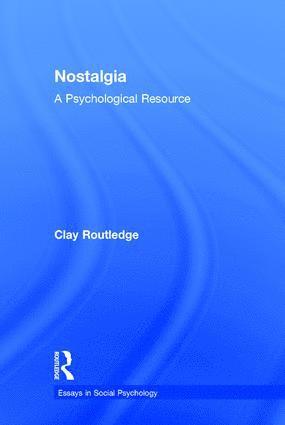
Du kanske också är intresserad av
The Science of Religion, Spirituality, and Existentialism
Kenneth E. Vail III, Clay Routledge
Häftad, 2020
2 499 kr