
Del i serien Greek Culture in the Roman World
Narrative and Identity in the Ancient Greek Novel
Returning Romance
Häftad, Engelska, 2015
469 kr
Beställningsvara. Skickas inom 5-8 vardagar. Fri frakt för medlemmar vid köp för minst 249 kr.
Finns i fler format (1)
The Greek romance was for the Roman period what epic was for the Archaic period or drama for the Classical: the central literary vehicle for articulating ideas about the relationship between self and community. This book offers a reading of the romance both as a distinctive narrative form (using a range of narrative theories) and as a paradigmatic expression of identity (social, sexual and cultural). At the same time it emphasises the elasticity of romance narrative and its ability to accommodate both conservative and transformative models of identity. This elasticity manifests itself partly in the variation in practice between different romancers, some of whom are traditionally Hellenocentric while others are more challenging. Ultimately, however, it is argued that it reflects a tension in all romance narrative, which characteristically balances centrifugal against centripetal dynamics. This book will interest classicists, historians of the novel and students of narrative theory. This title is also available as open access on Cambridge Core.
Produktinformation
- Utgivningsdatum2015-01-29
- Mått152 x 230 x 18 mm
- Vikt460 g
- FormatHäftad
- SpråkEngelska
- SerieGreek Culture in the Roman World
- Antal sidor312
- FörlagCambridge University Press
- ISBN9781107491021
Tillhör följande kategorier
Hoppa över listan

Mer från samma författare
Del 270
Thinking with Classical Matter
Miriam Leonard, Tim Whitmarsh, Miriam Leonard, Tim Whitmarsh
Inbunden, 2025
2 159 kr
Hoppa över listan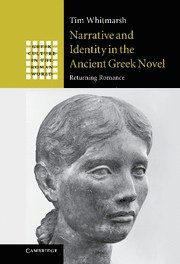
Du kanske också är intresserad av
Reception in the Greco-Roman World
Marco Fantuzzi, Helen Morales, Tim Whitmarsh
Inbunden, 2021
2 389 kr