
Money, Corruption, and Political Competition in Established and Emerging Democracies
Inbunden, Engelska, 2012
1 809 kr
Beställningsvara. Skickas inom 10-15 vardagar. Fri frakt för medlemmar vid köp för minst 249 kr.
Money, Corruption, and Competition in Established and Emerging Democracies, edited by Jonathan Mendilow, investigates the effectiveness of public subsidization of political competition as an anti-corruption mechanism. The exponential growth of advertising and polling techniques, the need to reach wider publics, and the inability to raise commensurate funds from ordinary members confront parties with ever-increasing difficulty to budget their apparatus. The use of contribution solicitation from corporations and wealthy individuals, drawing on the unpaid use of public services as sources or the imposition of “contributions” from government employees and contractors, and the “sale” of policies, concessions, or access to policy makers are commonly perceived as solutions corrosive to democratic governance. Such solutions shade into one another. Even where provider–consumer connections are only implied, donations by corporations and rich donors involve the desire to surmount the democratic constraints of “one man one vote” in order to gain disproportionate influence on the policy making process. An alternative resolution of the budgetary conundrum adopted by most democracies is the subsidization of political competition. This collection clarifies outcomes that are critical to an assessment of the ramifications for modern democracy. What do Western countries’ experiences with public funding tell us about unforeseen changes in the role of parties and their behavior that are seen as additional costs of the public subsidization of political competition? What can we learn from experiments with subsidization in different contexts about possible pitfalls that should be taken into account, especially when public subsidies are adopted by new and emerging democracies? Answers to such questions are critical if democratic principles and institutions that were formed in an earlier age are to be adjusted to modern needs. In a politically divisive climate, the contributors to this essential collection provide thoughtful insight to some of the most important public and economic policy questions facing our world today.
Produktinformation
- Utgivningsdatum2012-09-13
- Mått157 x 236 x 22 mm
- Vikt485 g
- FormatInbunden
- SpråkEngelska
- Antal sidor228
- FörlagBloomsbury Publishing Plc
- ISBN9780739170755
Tillhör följande kategorier
Hoppa över listan

Mer från samma författare
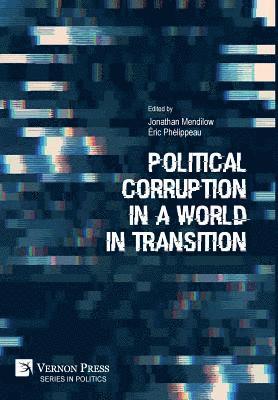
Political Corruption in a World in Transition
Jonathan Mendilow, Éric Phélippeau, Jonathan Mendilow, Éric Phélippeau
Inbunden, 2019
1 199 kr
Political Corruption in a World in Transition
Jonathan Mendilow, Éric Phélippeau, Jonathan Mendilow, Éric Phélippeau
Häftad, 2020
1 049 kr
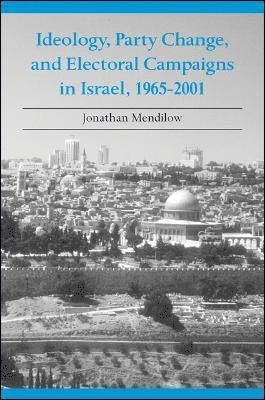
Ideology, Party Change, and Electoral Campaigns in Israel, 1965-2001
Jonathan Mendilow
Inbunden, 2003
1 459 kr
Hoppa över listan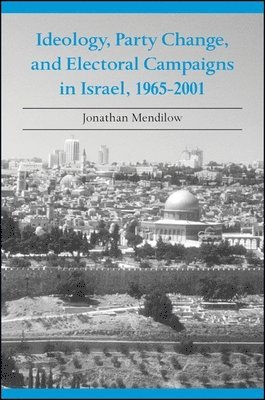
Du kanske också är intresserad av
Ideology, Party Change, and Electoral Campaigns in Israel, 1965-2001
Jonathan Mendilow
Häftad, 2003
549 kr
Political Corruption in a World in Transition
Jonathan Mendilow, Éric Phélippeau, Jonathan Mendilow, Éric Phélippeau
Häftad, 2020
1 049 kr
Ideology, Party Change, and Electoral Campaigns in Israel, 1965-2001
Jonathan Mendilow
Inbunden, 2003
1 459 kr