Beställningsvara. Skickas inom 5-8 vardagar. Fri frakt för medlemmar vid köp för minst 249 kr.
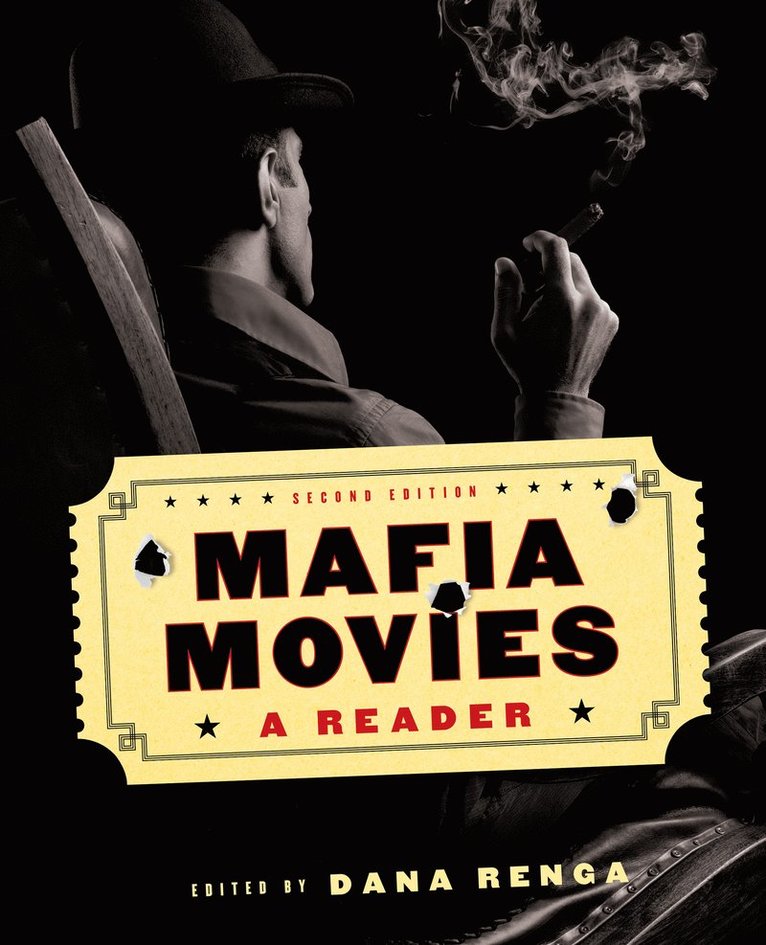
The mafia has always fascinated filmmakers and television producers. Al Capone, Salvatore Giuliano, Lucky Luciano, Ciro Di Marzio, Roberto Saviano, Don Vito and Michael Corleone, and Tony Soprano are some of the historical and fictional figures that contribute to the myth of the Italian and Italian-American mafias perpetuated onscreen. This collection looks at mafia movies and television over time and across cultures, from the early classics to the Godfather trilogy and contemporary Italian films and television series. The only comprehensive collection of its type, Mafia Movies treats over fifty films and TV shows created since 1906, while introducing Italian and Italian-American mafia history and culture. The second edition includes new original essays on essential films and TV shows that have emerged since the publication of the first edition, such as Boardwalk Empire and Mob Wives, as well as a new roundtable section on Italy’s "other" mafias in film and television, written as a collaborative essay by more than ten scholars. The edition also introduces a new section called "Double Takes" that elaborates on some of the most popular mafia films and TV shows (e.g. The Godfather and The Sopranos) organized around themes such as adaptation, gender and politics, urban spaces, and performance and stardom.
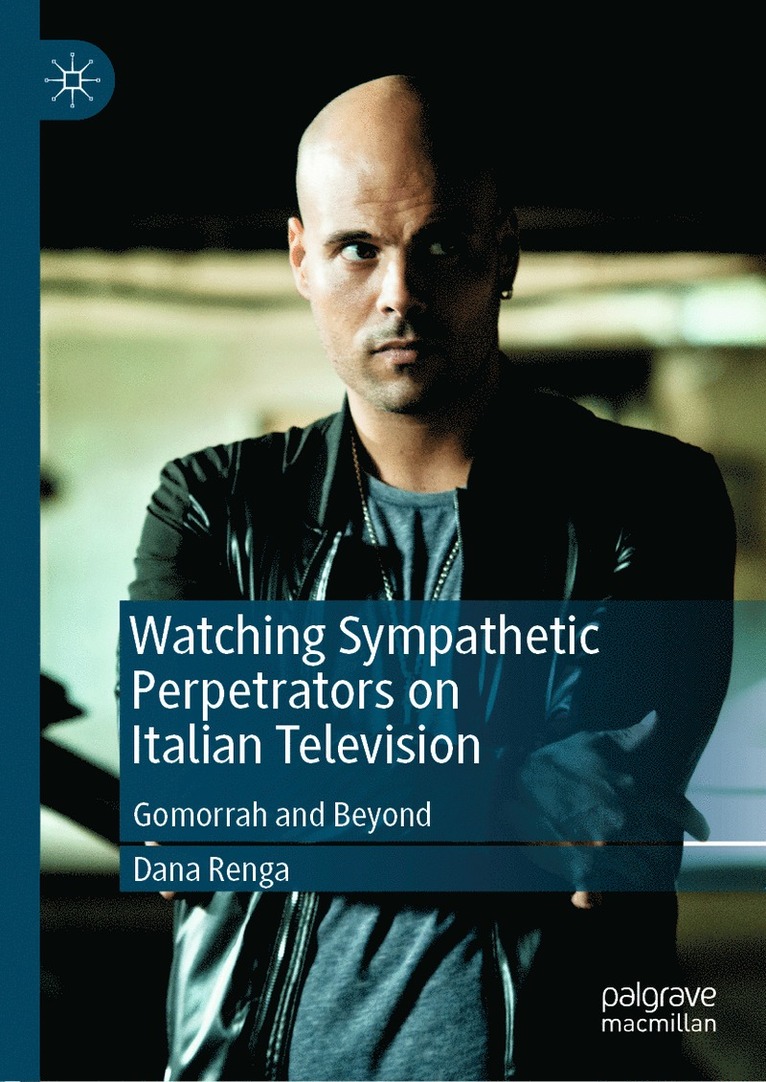
Dana Renga is an associate professor of Italian at The Ohio State University. She is the author of Unfinished Business: Screening the Italian Mafia in the New Millennium (2013) and Watching Sympathetic Perpetrators on Italian Television: Gomorrah and Beyond (2019) and has published extensively on Italian cinema and television.
AcknowledgmentsPart One. Setting the Scene1. The Corleones at Home and AbroadDana Renga, Ohio State University 2. Gender and Violence: Four Themes in the Everyday World of Mafia WivesJane Schneider, Graduate Center, CUNY (Emeritus) and Peter Schneider, Fordham University(Emeritus) Part Two. American Mafia Movies and Television: The Corleones at Home and Abroad3. Wallace McCutcheon’s The Black Hand: A Different Version of a Biograph KidnappingVincenzo Maggitti, University of Stockholm 4 ‘Most Thrilling Subjects’: D.W. Griffith and the Biograph Revenge FilmsJoAnne Ruvoli, Ball State University 5. Ethnicity and the Classical Gangster Film: Mervyn LeRoy’s Little Caesar and Howard Hawks’s ScarfaceNorma Bouchard, San Diego State University6. Playing Good Italian/Bad Italian on ABC’s The UntouchablesJonathan J. Cavallero, Bates College 7 Prelude to The Godfather: Martin Ritt’s The BrotherhoodRobert Casillo, University of Miami 8. Michael Corleone’s Tie: Francis Ford Coppola’s The GodfatherAnthony Julian Tamburri, John D. Calandra Italian American Institute, Queens College/CUNY 9. Nihilism and Mafiosita in Martin Scorsese’s Mean StreetsPellegrino D’Acierno, Hofstra University 10. Thematic Patterns in Francis Ford Coppola’s The Godfather: Part IIJohn Paul Russo, University of Miami11. The Sexual Politics of Loyalty in John Huston’s Prizzi’s HonorRebecca Bauman, Fashion Institute of Technology12. Between Postmodern Parody and Generic Hybridization: The Gangsters of Brian De Palma’s The UntouchablesNorma Bouchard, San Diego State University13. The Bandit, the Gangster, and the American Army Shorts: Michael Cimino’s The SicilianChiara Mazzucchelli, The University of Central Florida14. Martin Scorsese’s Goodfellas: Hybrid Storytelling between Realism and FormalismFulvio Orsitto, California State University15. Redemption in Francis Ford Coppola’s The Godfather: Part IIIJohn Paul Russo, University of Miami16. Narrating the Mafia, Las Vegas, and Ethnicity in Martin Scorsese’s CasinoClaudio Bisoni, University of Bologna17. ‘Nothing Romantic about It’: Gender and the Legacy of Crime in Abel Ferrara’s The FuneralLara Santoro, Drew University18. Inside the Mafia: Mike Newell’s Donnie BrascoRobert Casillo, University of Miami19. Family Therapy: Harold Ramis’s Analyze This and the Evolution of the Gangster GenreLouis Bayman, University of Southampton20. Martin Scorsese’s The Departed, or the Quest for a Departed (Ethnic) IdentityMargherita Heyer-Caput, University of California21. When Words Can Kill: David Chase’s The SopranosFranco Ricci, The University of Ottawa22. ‘Don’t Stop Believin’, Don’t Stop …’: (De)Structuring Expectations in the Final Season of The SopranosGiancarlo Lombardi, College of Staten Island & CUNY Graduate Center23. ‘History Doesn’t Repeat Itself, but It Does Rhyme’: Fictionalizing History in Boardwalk EmpirePaolo Russo, Oxford Brookes University24. Mob Wives: Exploitation or Empowerment?Jacqueline Reich, Fordham University and Fatima Karin, Fordham UniversityPart Three. Italian Mafia Movies and Television: Resistance and Myth25. Which Law Is the Father’s? Gender and Generic Oscillation in Pietro Germi’s In the Name of the LawDanielle Hipkins, University of Exeter, University of Exeter 26. The Visible, Unexposed: Francesco Rosi’s Salvatore GiulianoLaura Wittman, Stanford University 27. Modernity, Mafia Style: Alberto Lattuada’s MafiosoNelson Moe, Barnard College, Columbia University 28. Francesco Rosi’s Hands over the City: A Contemporary Perspective on the CamorraAnna Paparcone, Bucknell University 29. Prototypes of the Mafia: Luchino Visconti’s The LeopardElizabeth Leake, Columbia University 30. The Failure of the Intellectual: Elio Petri’s Filming of Leonardo Sciascia’s To Each His OwnDaniela Bini, University of Texas 31. Damiano Damiani’s The Day of the Owl: A Western FlirtationPiero Garofalo, University of New Hampshire 32. Smaller and Larger Families: Lina Wertmüller’s The Seduction of MimiThomas Harrison, University of California, Los Angeles 33. Deconstructing the Enigma: Logical Investigations in Francesco Rosi’s Lucky LucianoGaetana Marrone, Princeton University 34. Power as Such: The Idea of the Mafia in Francesco Rosi’s Illustrious CorpsesAlan O’Leary, University of Leeds 35. Marco Risi’s Forever Mary: Desperate Lives Converge in Sicilia ‘Non Bedda’George De Stefano, Author and Critic 36. Threads of Political Violence in Italy’s Spiderweb: Giorgio Ambrosoli’s Murder in Michele Placido’s A Bourgeois HeroCarlo Testa, University of British Columbia 37. Sacrifice, Sacrament, and the Body in Ricky Tognazzi’s La scortaMyriam Swennen Ruthenberg, Florida Atlantic University 38. Pasquale Scimeca’s Placido Rizzotto: A Different View of CorleoneAmy Boylan, The University of New Hampshire 39. Marco Tullio Giordana’s The Hundred Steps: The Biopic as Political CinemaGeorge De Stefano, Author and Critic 40. Roberta Torre’s Angela: The Mafia and the ‘Woman’s Film’Catherine O’Rawe, University of Bristol 41. Organized Crime and Unfulfilled Promises in Gabriele Salvatores’ I’m Not ScaredMichael O’Riley, Colorado College 42. Growing Up Camorrista: Antonio and Andrea Frazzi’s Certi bambiniAllison Cooper, Bowdoin College 43. Lipstick and Chocolate: Paolo Sorrentino’s The Consequences of LoveMary P Wood, Birkbeck, University of London 44. The In(di)visibility of the Mafia, Politics, and Ethics in Bianchi and Nerazzini’s The Mafia Is WhiteRobin Pickering-Iazzi, The University of Wisconsin 45. Marco Turco’s Excellent Cadavers: An Italian TragedyMaddalena Spazzini, Richmond College 46. Dispatches from Hell: Matteo Garrone’s GomorrahPierpaolo Antonello, The University of Cambridge 47. From Comedy to Commemoration: Pierfrancesco Diliberto’s La mafia uccide solo d’estateMillicent Marcus, Yale University 48. Fabio Grassadonia and Antonio Piazza’s Salvo: The Sound of Redemption in an Infernal LandscapeAmy Boylan, The University of New Hampshire 49. Of Renegades and Game Players: Shifting Sympathies in Gomorra: la serieGiancarlo Lombardi, College of Staten Island & CUNY Graduate CenterPart Four. Italy’s Other Mafias in Film and on Television: A Roundtable50. Introduction – The Banda della Magliana, the Camorra, the ’Ndrangheta, and the Sacra Corona Unita: The Mafia On Screen beyond the Cosa NostraDana Renga, Ohio State University 51. Historicizing Italy’s Other Mafias: Some ConsiderationsJohn Dickie, University College London 52. Romanzo criminale: Roma Caput ViolandiAllison Cooper, Bowdoin College 53. Romanzo criminale: la serieCatherine O’Rawe, University of Bristol 54. Toxic Tables: The Representation of Food in Camorra FilmsAmy Boylan, The University of New Hampshire 55. The New Mafia in Una vita tranquillaGiovanna De Luca, College of Charleston 56. Soap OperasGiancarlo Lombardi, College of Staten Island & CUNY Graduate Center 57. Response #1Robert Gordon, The University of Cambridge 58. Response #2Danielle Hipkins, University of Exeter 59. Response #3Robin Pickering-Iazzi, The University of Wisconsin 60. ConclusionAllison Cooper, Bowdoin CollegePart Five. Double TakesThe Godfather 61. The Godfather: Performance and StardomDominic Holdaway, Università Cattolica del Sacro Cuor 62. The Godfather: AdaptationAlberto Zambenedetti, University of Toronto 63. The Godfather: GenderDana Renga, Ohio State University 64. The Godfather: Scene Analysis – Don Vito’s OfficeAlberto Zambenedetti, University of Toronto 65. The Godfather: Scene Analysis – The Baptism/MurderAlberto Zambenedetti, University of Toronto 66. The Godfather: Scene Analysis – The FinaleDaniel Paul, The Ohio State University The Sopranos 67. The Sopranos: Antiheroic MasculinityDana Renga, Ohio State University 68. The Sopranos: GenderDominic Holdaway, Università Cattolica del Sacro Cuor 69. The Sopranos: (Sub)Urban SpaceAlberto Zambenedetti, University of Toronto 70. The Sopranos: Episode 1.01, ‘The Sopranos’Dominic Holdaway, Università Cattolica del Sacro Cuor 71 The Sopranos: Episode 1.05, ‘College’Sean O’Sullivan, The Ohio State University 72. The Sopranos: Episode 2.04, ‘Commendatori’Sean O’Sullivan, The Ohio State University Romanzo criminale 73. Romanzo criminale: Performance and StardomCatherine O’Rawe, University of Bristol 74. Romanzo criminale: Adaptation/TransmediaDominic Holdaway, Università Cattolica del Sacro Cuor 75. Romanzo criminale: GenderDanielle Hipkins, University of Exeter 76. Romanzo criminale: Politics and TerrorismDominic Holdaway, Università Cattolica del Sacro Cuor 77. Romanzo criminale: Scene Analysis – The Aldo Moro KidnappingCatherine O’Rawe, University of Bristol 78. Romanzo criminale: Scene Analysis – The Bologna BombingAlan O’Leary, University of Leeds Gomorrah 79. Gomorrah: GenderElena Past, Wayne State University 80. Gomorrah: Metacinematic ReferencesAlberto Zambenedetti, University of Toronto 81. Gomorrah: Urban SpaceMonica Seger, William and Mary University 82. Gomorrah: Scene Analysis – Opening SequenceAlberto Zambenedetti, University of Toronto 83. Gomorrah: Scene Analysis – The Initiation of TotòAlberto Zambenedetti, University of Toronto 84. Gomorrah: Scene Analysis – The FinaleMonica Seger, William and Mary University FilmographySelected BibliographyContributors
"Mafia Movies: A Reader is a rich resource for those interested in the representation of mafias in American and Italian productions. […] The revised edition not only has a broader scope but it has also doubled the number of contributions on about fifty productions which makes it useful both to scholars and students alike."- Inge Lanslots, KU Leuven, Belgium (Annali d’italianistica)