
Del 53 i serien Legal History Library
Justice and Society in the Highlands of Scotland
Strathspey and the Regality of Grant (c. 1690-1748)
Inbunden, Engelska, 2021
2 249 kr
Beställningsvara. Skickas inom 5-8 vardagar. Fri frakt för medlemmar vid köp för minst 249 kr.
This book fills a significant gap in our current understanding of early modern Scottish history. It is the first systematic consideration of the workings of seigneurial courts of feudal lords in 18th century Scotland. For several hundred years, these courts were one of the main forums for justice across Europe. Until 1748, Scottish courts of barony and regality handled both criminal complaints and civil disputes; they made by-laws and levied taxes; they set wages and enforced morality. The 18th century was a time of epoch-defining events in Scotland, such as the Jacobite rebellions, and union with England. The amount of literature on this period of Scottish history is extensive; it is therefore remarkable that the story of these courts has been left untouched.
Produktinformation
- Utgivningsdatum2021-10-28
- Mått155 x 235 x 23 mm
- Vikt577 g
- FormatInbunden
- SpråkEngelska
- SerieLegal History Library
- Antal sidor254
- FörlagBrill
- ISBN9789004472518
Tillhör följande kategorier
Hoppa över listan

Mer från samma serie
Del 12
Del 46
Del 64
Del 27
Del 40
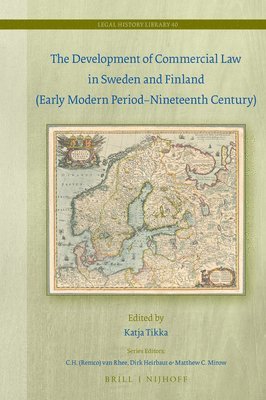
Development of Commercial Law in Sweden and Finland (Early Modern Period–Nineteenth Century)
Katja Tikka
Inbunden, 2020
2 899 kr
Del 60
History of Civil Law in Early China: Cases, Statutes, Concepts and Beyond
Zhaoyang Zhang
Inbunden, 2022
2 369 kr
Del 33
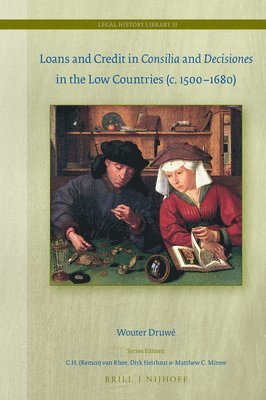
Loans and Credit in Consilia and Decisiones in the Low Countries (c. 1500-1680)
Wouter Druwé
Inbunden, 2020
5 189 kr
Del 36
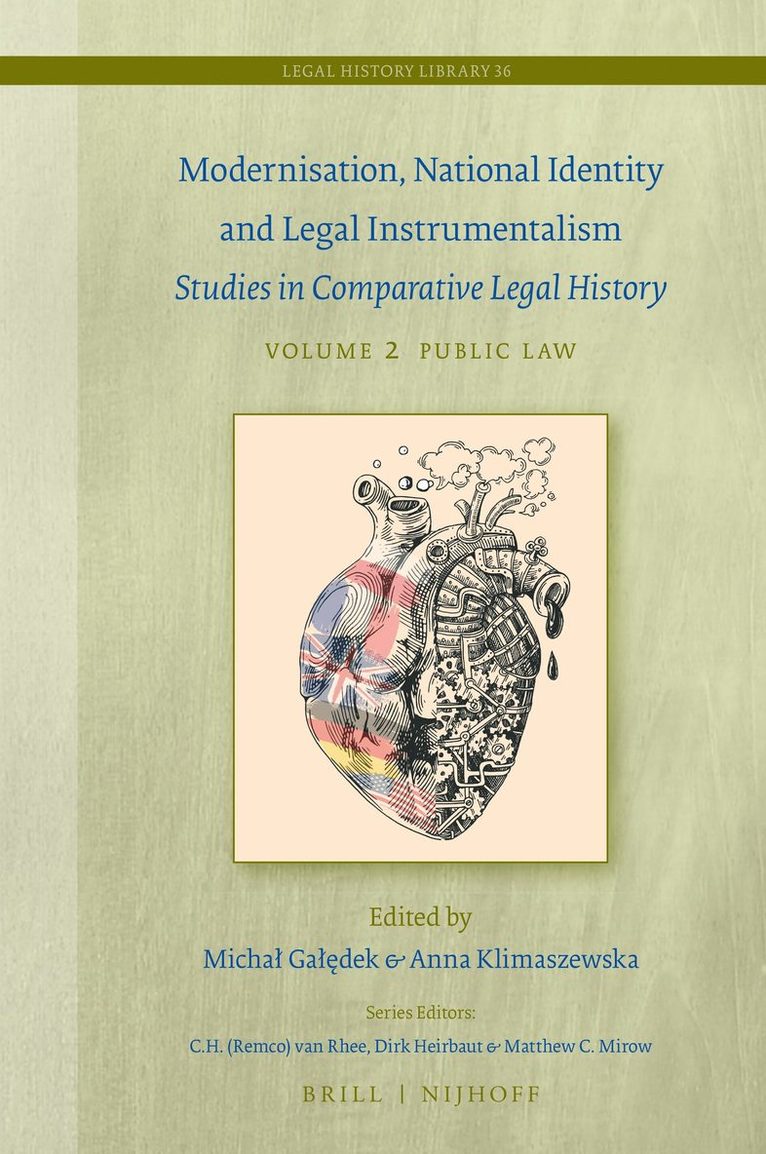
Modernisation, National Identity and Legal Instrumentalism (Vol. II: Public Law)
Michal Galedek
Inbunden, 2019
2 449 kr
Del 42
Del 63
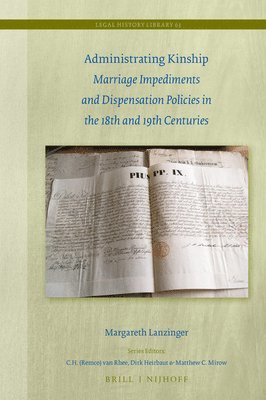
Administrating Kinship: Marriage Impediments and Dispensation Policies in the 18th and 19th Centuries
Margareth Lanzinger
Inbunden, 2023
3 019 kr
Hoppa över listan







Du kanske också är intresserad av
Del 64
Del 63
Administrating Kinship: Marriage Impediments and Dispensation Policies in the 18th and 19th Centuries
Margareth Lanzinger
Inbunden, 2023
3 019 kr