
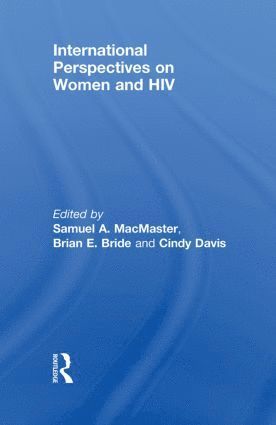
International Perspectives on Women and HIV
Inbunden, Engelska, 2009
1 899 kr
Tillfälligt slut
Throughout the world, the threat of HIV/AIDS to women’s health has become the focus of increased concern. The Joint United Nations Programme on HIV/AIDS (2004) reports that almost 20 million women and girls are living with HIV globally, accounting for nearly half of all people living with HIV worldwide. Infection rates among women are rising in every region worldwide including high-income countries in which heterosexual intercourse may now be the most common mode of transmission. Although there are many contributing factors to the current trends in HIV, most women who become HIV-infected do not practice "high-risk" behaviour. Women worldwide may individually view themselves as less susceptible than men, and may pay less attention about how HIV is transmitted and how to prevent infection. There are also gender inequalities, stemming from sexual double standards that constrain women’s access to care, treatment, and support. This work focuses on international perspectives on women and HIV casting a deliberately wide net addressing the issue of the interaction between HIV and gender in a specific geographic area. Our intention is to provide a forum for innovative manuscripts whose contribution to the literature is found in their unique approach to this interaction and application of empirical investigation to unique problems and/or populations.This material was published in the Journal of Human Behavior in the Social Environment.
Produktinformation
- Utgivningsdatum2009-07-10
- Mått152 x 229 x undefined mm
- Vikt408 g
- FormatInbunden
- SpråkEngelska
- Antal sidor214
- FörlagTaylor & Francis Ltd
- ISBN9780415998376
Tillhör följande kategorier
Hoppa över listan

Du kanske också är intresserad av
International Perspectives on Women and HIV
Samuel A MacMaster, Brian E Bride, CINDY DAVIS
Häftad, 2013
1 149 kr
