
In-Memory Data Management
Technology and Applications
Häftad, Engelska, 2016
1 189 kr
Beställningsvara. Skickas inom 10-15 vardagar. Fri frakt för medlemmar vid köp för minst 249 kr.
Finns i fler format (1)
In the last fifty years the world has been completely transformed through the use of IT. We have now reached a new inflection point. This book presents, for the first time, how in-memory data management is changing the way businesses are run. Today, enterprise data is split into separate databases for performance reasons. Multi-core CPUs, large main memories, cloud computing and powerful mobile devices are serving as the foundation for the transition of enterprises away from this restrictive model. This book provides the technical foundation for processing combined transactional and analytical operations in the same database. In the year since we published the first edition of this book, the performance gains enabled by the use of in-memory technology in enterprise applications has truly marked an inflection point in the market. The new content in this second edition focuses on the development of these in-memory enterprise applications, showing how they leverage the capabilities ofin-memory technology. The book is intended for university students, IT-professionals and IT-managers, but also for senior management who wish to create new business processes.
Produktinformation
- Utgivningsdatum2016-08-23
- Mått155 x 235 x 17 mm
- Vikt464 g
- FormatHäftad
- SpråkEngelska
- Antal sidor267
- Upplaga2
- FörlagSpringer-Verlag Berlin and Heidelberg GmbH & Co. KG
- ISBN9783662520499
Tillhör följande kategorier
Hoppa över listan


Mer från samma författare
High-Performance In-Memory Genome Data Analysis
Hasso Plattner, Matthieu-P. Schapranow
Inbunden, 2013
2 149 kr
High-Performance In-Memory Genome Data Analysis
Hasso Plattner, Matthieu-P. Schapranow
Häftad, 2016
2 149 kr
Hoppa över listan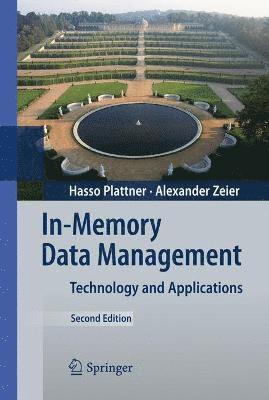

Du kanske också är intresserad av
Supply Chain Management Based on SAP Systems
Gerhard F. Knolmayer, Peter Mertens, Alexander Zeier
Häftad, 2010
739 kr
Supply Chain Management Based on SAP Systems
Gerhard F. Knolmayer, Peter Mertens, Alexander Zeier, Jörg Thomas Dickersbach
Inbunden, 2008
739 kr
Supply Chain Management Based on SAP Systems
Gerhard F. Knolmayer, Peter Mertens, Alexander Zeier, Jörg Thomas Dickersbach
Häftad, 2014
739 kr
High-Performance In-Memory Genome Data Analysis
Hasso Plattner, Matthieu-P. Schapranow
Inbunden, 2013
2 149 kr
Supply Chain Management Based on SAP Systems
Gerhard F. Knolmayer, Peter Mertens, Alexander Zeier
Inbunden, 2002
739 kr