
Herta Müller
Politics and Aesthetics
Häftad, Engelska, 2013
649 kr
Beställningsvara. Skickas inom 10-15 vardagar. Fri frakt för medlemmar vid köp för minst 249 kr.
Finns i fler format (2)
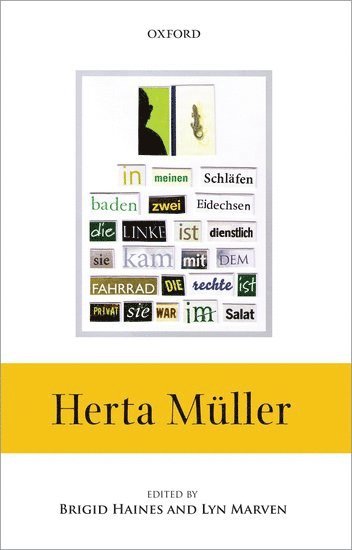
Two languages-German and Romanian-inform the novels, essays, and collage poetry of Nobel laureate Herta MÜller. Describing her writing as “autofictional,” MÜller depicts the effects of violence, cruelty, and terror on her characters based on her own experiences in Communist Romania under the repressive Nicolae Ceauşescu regime.Herta MÜller: Politics and Aesthetics explores MÜller’s writings from different literary, cultural, and historical perspectives. Part 1 features MÜller’s Nobel lecture, five new collage poems, and an interview with Ernest Wichner, a German-Romanian author who has traveled with her and sheds light on her writing. Parts 2 and 3, featuring essays by scholars from across Europe and the United States, address the political and poetical aspects of MÜller’s texts. Contributors discuss life under the Romanian Communist dictatorship while also stressing key elements of MÜller’s poetics, which promises both self-conscious formal experimentation and political intervention.One of the first books in English to thoroughly examine MÜller’s writing, this volume addresses audiences with an interest in dissident, exile, migration, experimental, and transnational literature.
Produktinformation
- Utgivningsdatum2013-11-01
- Mått152 x 229 x 24 mm
- Vikt446 g
- FormatHäftad
- SpråkEngelska
- Antal sidor312
- FörlagUniversity of Nebraska Press
- ISBN9780803245105
Tillhör följande kategorier
Hoppa över listan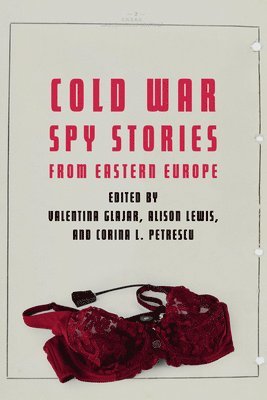
Du kanske också är intresserad av
Cold War Spy Stories from Eastern Europe
Corina L Petrescu, Valentina Glajar, Alison Lewis, Corina L. Petrescu
Inbunden, 2019
489 kr
Vampirettes, Wretches and Amazons – Western Representations of East European Women
Valentina Glajar, Valentina Glajar, Domnica Radulescu
Inbunden, 2005
479 kr
Del 33
Del 1