
Evolution and the Common Law
Häftad, Engelska, 2005
909 kr
Beställningsvara. Skickas inom 5-8 vardagar. Fri frakt för medlemmar vid köp för minst 249 kr.
Finns i fler format (1)
This book offers a radical challenge to accounts of the common law's development. Contrary to received jurisprudential wisdom, it maintains there is no grand theory which will explain satisfactorily the dynamic interactions of change and stability in the common law's history. Offering original readings of Charles Darwin's and Hans-Georg Gadamer's works, the book shows that law is a rhetorical activity that can only be properly appreciated in its historical and political context; tradition and transformation are locked in a mutually reinforcing but thoroughly contingent embrace. In contrast to the dewy-eyed offerings of much contemporary work, it demonstrates that, like life, law is an organic process (i.e., events are the products of functional and localized causes) rather than a miraculous one (i.e., events are the result of some grand plan or intervention). In short, common law is a perpetual work-in-progress - evanescent, dynamic, messy, productive, tantalising, and bottom-up.
Produktinformation
- Utgivningsdatum2005-04-04
- Mått155 x 235 x 18 mm
- Vikt425 g
- FormatHäftad
- SpråkEngelska
- Antal sidor306
- FörlagCambridge University Press
- ISBN9780521614917
Tillhör följande kategorier
Hoppa över listan


Mer från samma författare
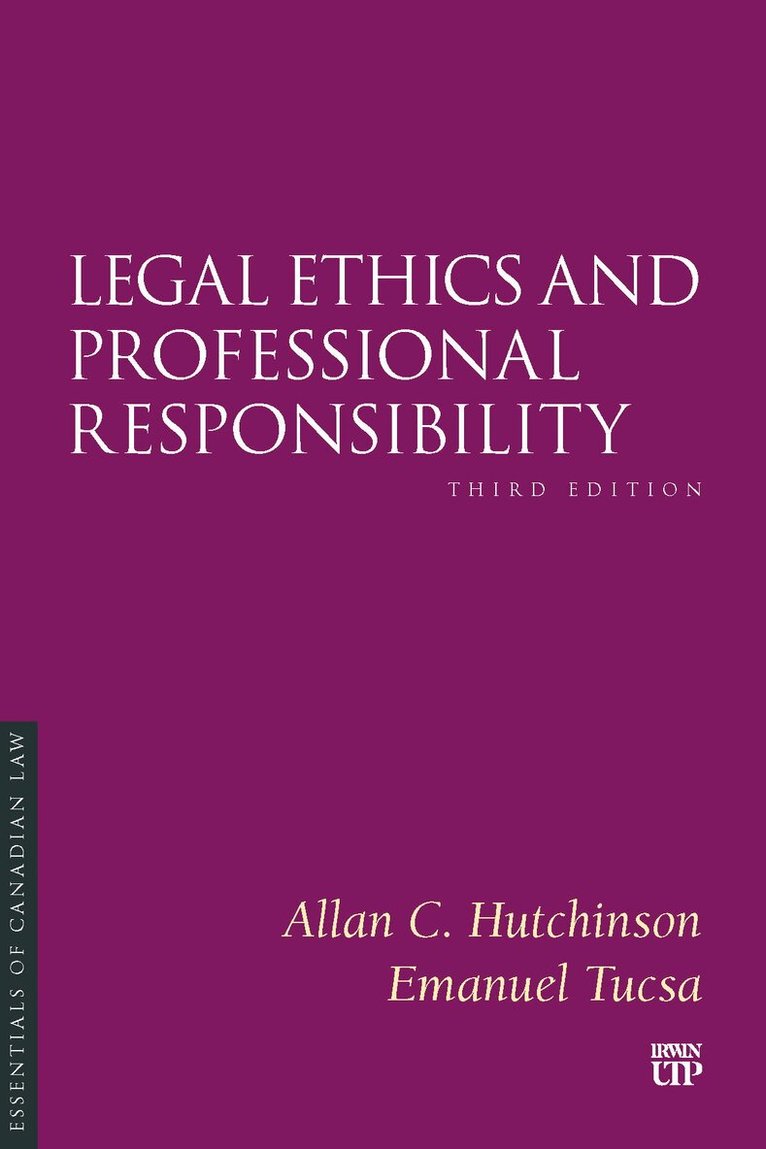
Legal Ethics and Professional Responsibility
Allan C. Hutchinson, Emanuel Raul Tucsa
Häftad, 2027
739 kr
Hoppa över listan
Du kanske också är intresserad av
Legal Ethics and Professional Responsibility
Allan C. Hutchinson, Emanuel Raul Tucsa
Häftad, 2027
739 kr