
Del i serien Aris & Phillips Classical Texts
Euripides: Suppliant Women
Häftad, Engelska, 2006
769 kr
Beställningsvara. Skickas inom 5-8 vardagar. Fri frakt för medlemmar vid köp för minst 249 kr.
A group of Argive women has come to Eleusis to ask King Theseus and his city of Athens to bring about the burial of their sons who are being denied it by their Theban conquerors. Theseus is confronted with a challenge which at first he declines to take up, but then does so magnificently. The range of the play's debate is astonishing. It contains one of the Ur-texts of political theory. It explores social and religious themes. It deals with the concept of a just war, with the family, and with the role and behaviour of women. Above all it sets before us the education of Theseus, showing us movingly how this great hero is transformed into a great man. Greek text with facing translation, introduction and commentary.
Produktinformation
- Utgivningsdatum2006-12-20
- Mått147 x 210 x undefined mm
- FormatHäftad
- SpråkEngelska
- SerieAris & Phillips Classical Texts
- Antal sidor268
- FörlagLiverpool University Press
- ISBN9780856687846
- ÖversättareJames Morwood
Tillhör följande kategorier
Hoppa över listan
Mer från samma författare
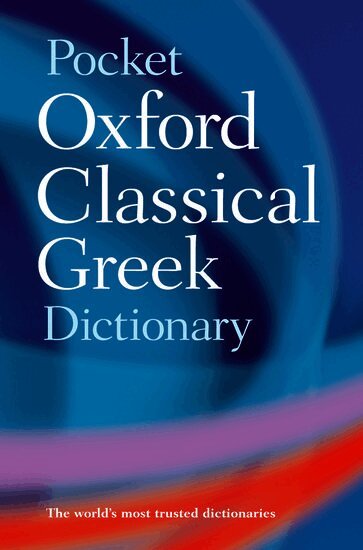
The Pocket Oxford Classical Greek Dictionary
The late James Morwood, James Morwood, John Taylor
Häftad, 2002
249 kr
Oxford Latin Course: College Edition: Readings and Vocabulary
Maurice Balme, James Morwood
Häftad
1 599 kr
Oxford Latin Course, College Edition: Grammar, Exercises, Context
Maurice Balme, James Morwood
Häftad
1 539 kr