
Del 5
Egypt of the Saite Pharaohs, 664–525 Bc
Inbunden, Engelska, 2019
1 589 kr
Beställningsvara. Skickas inom 5-8 vardagar. Fri frakt för medlemmar vid köp för minst 249 kr.
Finns i fler format (1)
In the 660s BC Egypt was a politically fragmented and occupied country. However, this was to change when a family of local rulers from the city of Sais declared independence from the Assyrian Empire, and in a few short years succeeded in bringing about the reunification of Egypt. The Saites established central government, reformed the economy and promoted trade. The country became prosperous, achieving a pre-eminent role in the Mediterranean world. This is the first monograph devoted entirely to a detailed exploration of the Saite Dynasty. It reveals the dynamic nature of the period, the astuteness of the Saite rulers and their considerable achievements in the political, economic, administrative and cultural spheres. It will appeal not only to students of Egyptology but also, because of the interactions of the Saite Dynasty with the Aegean and Mesopotamia worlds, to anyone interested in ancient history.
Produktinformation
- Utgivningsdatum2019-05-22
- Mått156 x 234 x 17 mm
- Vikt562 g
- FormatInbunden
- SpråkEngelska
- Antal sidor248
- FörlagManchester University Press
- ISBN9781526140142
Tillhör följande kategorier
Hoppa över listan
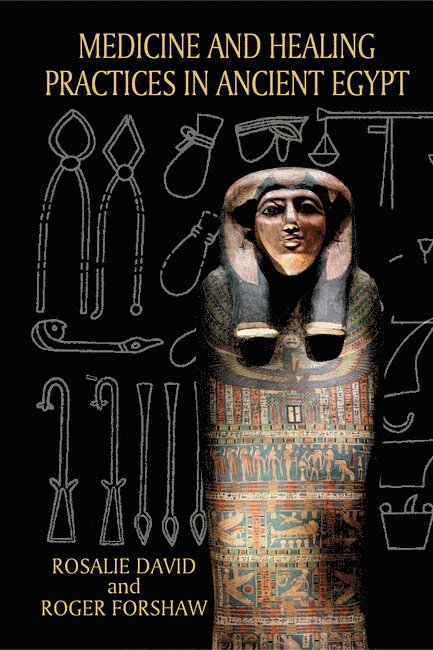
Mer från samma författare
Mummies, Magic and Medicine in Ancient Egypt
Campbell Price, Roger Forshaw, Andrew Chamberlain, Paul Nicholson
Inbunden, 2016
1 539 kr
Mummies, Magic and Medicine in Ancient Egypt
Campbell Price, Roger Forshaw, Andrew Chamberlain, Paul Nicholson
Häftad, 2018
669 kr
Hoppa över listan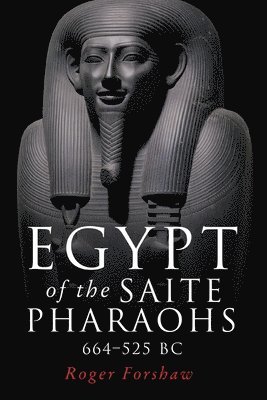
Du kanske också är intresserad av
Mummies, Magic and Medicine in Ancient Egypt
Campbell Price, Roger Forshaw, Andrew Chamberlain, Paul Nicholson
Inbunden, 2016
1 539 kr
Mummies, Magic and Medicine in Ancient Egypt
Campbell Price, Roger Forshaw, Andrew Chamberlain, Paul Nicholson
Häftad, 2018
669 kr
Del 5
- Nyhet
Escalade 1 Textbok
Birgitta Tillman, Sylvia Martin, Marie Pettersson, Ewa Sandberg, Matts Winblad, Véronique Lönnerblad
Häftad, 2012
399 kr
Escalade 1 Övningsbok
Birgitta Tillman, Sylvia Martin, Marie Pettersson, Ewa Sandberg, Matts Winblad, Véronique Lönnerblad
Häftad, 2012
329 kr