Beställningsvara. Skickas inom 5-8 vardagar. Fri frakt för medlemmar vid köp för minst 249 kr.
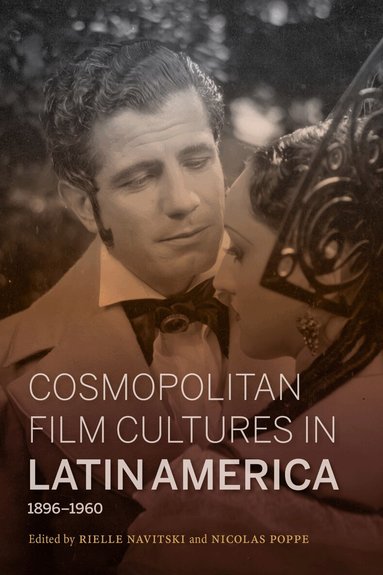
Cosmopolitan Film Cultures in Latin America examines how cinema forged cultural connections between Latin American publics and film-exporting nations in the first half of the twentieth century. Predating today's transnational media industries by several decades, these connections were defined by active economic and cultural exchanges, as well as longstanding inequalities in political power and cultural capital. The essays explore the arrival and expansion of cinema throughout the region, from the first screenings of the Lumière Cinématographe in 1896 to the emergence of new forms of cinephilia and cult spectatorship in the 1940s and beyond. Examining these transnational exchanges through the lens of the cosmopolitan, which emphasizes the ethical and political dimensions of cultural consumption, illuminates the role played by moving images in negotiating between the local, national, and global, and between the popular and the elite in twentieth-century Latin America. In addition, primary historical documents provide vivid accounts of Latin American film critics, movie audiences, and film industry workers' experiences with moving images produced elsewhere, encounters that were deeply rooted in the local context, yet also opened out onto global horizons.
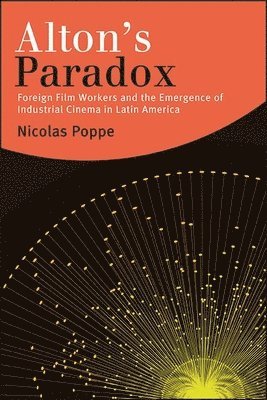
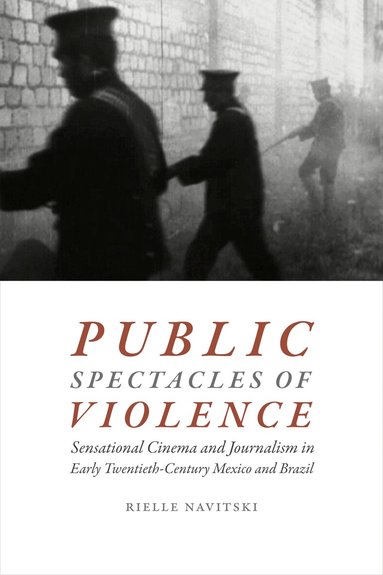
Rielle Navitski is Assistant Professor of Film Studies at the University of Georgia. She is author of Public Spectacles of Violence: Sensational Cinema and Journalism in Early Twentieth-Century Mexico and Brazil.Nicolas Poppe is Assistant Professor of Spanish at Middlebury College. His work on Latin American cinema and cultural studies has appeared in several edited volumes and journals.
AcknowledgmentsIntroductionPart I: The Silent Era: Between Global Capitalism and National ModernizationPrimary text: "The Lumière Cinematograph," El Monitor Republicano (Mexico City), August 16, 1896 1. Gabriel Veyre and Fernand Bon Bernard, Representatives of the Lumière Brothers in Mexico / Aurelio de los Reyes Primary text: Tic Tac (Carlos Villafañe), "The Show on June 15th," Películas (Bogotá), June 19192. Films on Paper: Early Colombian Cinema Periodicals, 1916-1920 / Juan Sebastián Ospina León Primary text: Enrique Méndez Calzada, "The Lover of Rudolph Valentino" from And Christ Returned to Buenos Aires (1926)3. Manipulation and Authenticity: The Unassimilable Valentino in 1920s Argentina / Giorgio Bertellini Part II: The Interwar Period: Between Hollywood and the Avant-GardePrimary text: Felipe de Leiva, "Memoirs of an Extra," Cinelandia, (Hollywood) November/December 19274. Mediating the 'Conquering and Cosmopolitan Cinema:' Latin American Audiences and U.S. Film Magazines in Spanish, 1916-1948 / Rielle NavitskiPrimary text: Octávio de Faria, "Russian Cinema and Brazilian Cinema," O Fan (Rio de Janeiro), October 2, 19285. Parallel Modernities: the First Reception of Soviet Cinema in Latin America / Sarah Ann WellsPrimary text: Guillermo de Torre, "The Cineclub of Buenos Aires," La Gaceta Literaria (Madrid), April 1, 1930 6. A Gaze Turned Towards Europe: Modernity and Tradition in the Work of Horacio Coppola / Andrea CuarteroloPart III: The Golden Age of Latin American Film Industries: Negotiating the Popular and the CosmopolitanPrimary text: John Alton, "Motion Picture Production in South America," International Photographer (Hollywood), May 19347. John Alton in Argentina, 1932-1939 / Nicolas Poppe8. The Golden Age Otherwise: Mexican Cinema and the Mediations of Capitalist Modernity in the 1940s and 1950s / Ignacio M. Sánchez PradoPrimary text: Gabriel García Márquez, "The Mambo" El Heraldo (Barranquilla), January 12, 19519. Bad Neighbors: Pérez Prado, Cinema and the Politics of Mambo / Jason Borge Part IV: The Afterlives of Moving Images: Cinephilia and Cult SpectatorshipPrimary text: Thomas E. Sibert, "Fox Film de Cuba, S.A.'s Continuing Competition for Scholarships to Summer School at the Universidad de la Habana" (1956)10. Film Culture and Education in Republican Cuba: The Legacy of José Manuel Valdés-Rodríguez / Irene Rozsa 11. The Secret History of Aztlán: Transnational Exploitation Film, Chicano Art and Unexpected Cultural Flows / Colin GunckelIndex
"...an indispensable and timely work of historiography."—Zuzana Pick, author of The New Latin American Cinema: A Continental Project"Cosmopolitan Film Cultures is a timely revision of current debates in theeld of Film Studies. It offers a new understanding of moving images in Latin America as the result of negotiations of national agendas, cosmopolitan impulses and transnationalows of cultural commodities and capital."—Bulletin of Spanish Visual Studies