
Contractualism and the Foundations of Morality
Inbunden, Engelska, 2010
2 369 kr
Beställningsvara. Skickas inom 3-6 vardagar. Fri frakt för medlemmar vid köp för minst 249 kr.
Finns i fler format (1)
Contractualism has a venerable history and considerable appeal. Yet as an account of the foundations or ultimate grounds of morality it has been thought by many philosophers to be subject to fatal objections. In this book Nicholas Southwood argues otherwise. Beginning by detailing and diagnosing the shortcomings of the existing "Hobbesian" and "Kantian" models of contractualism, he then proposes a novel "deliberative" model, based on an interpersonal, deliberative conception of practical reason. He argues that the deliberative model of contractualism represents an attractive alternative to its more familiar rivals and that it has the resources to offer a more compelling account of morality's foundations, one that does justice to the twin demands of moral accuracy and explanatory adequacy.
Produktinformation
- Utgivningsdatum2010-11-04
- Mått154 x 224 x 18 mm
- Vikt408 g
- FormatInbunden
- SpråkEngelska
- Antal sidor222
- FörlagOUP OXFORD
- ISBN9780199539659
Tillhör följande kategorier
Hoppa över listan
Mer från samma författare
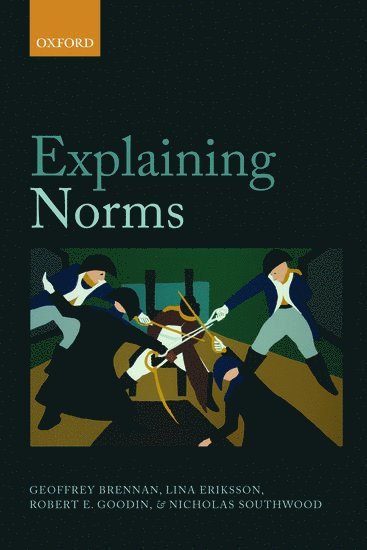
Explaining Norms
Geoffrey Brennan, Lina Eriksson, Robert E. Goodin, Nicholas Southwood
Häftad, 2016
719 kr
Explaining Norms
Geoffrey Brennan, Lina Eriksson, Robert E. Goodin, Nicholas Southwood
Inbunden, 2013
2 289 kr
Hoppa över listan






Du kanske också är intresserad av
Explaining Norms
Geoffrey Brennan, Lina Eriksson, Robert E. Goodin, Nicholas Southwood
Häftad, 2016
719 kr
Explaining Norms
Geoffrey Brennan, Lina Eriksson, Robert E. Goodin, Nicholas Southwood
Inbunden, 2013
2 289 kr
- Nyhet
Del 3
- Nyhet
Del 11
- Nyhet
Del 6
- Nyhet
- Nyhet
Del 4
Del 1