
Del 10 i serien Applied Optimization
Computational Complexity and Feasibility of Data Processing and Interval Computations
Häftad, Engelska, 2010
2 869 kr
Beställningsvara. Skickas inom 10-15 vardagar. Fri frakt för medlemmar vid köp för minst 249 kr.
Finns i fler format (1)
Targeted audience • Specialists in numerical computations, especially in numerical optimiza tion, who are interested in designing algorithms with automatie result ver ification, and who would therefore be interested in knowing how general their algorithms caIi in principle be. • Mathematicians and computer scientists who are interested in the theory 0/ computing and computational complexity, especially computational com plexity of numerical computations. • Students in applied mathematics and computer science who are interested in computational complexity of different numerical methods and in learning general techniques for estimating this computational complexity. The book is written with all explanations and definitions added, so that it can be used as a graduate level textbook. What this book .is about Data processing. In many real-life situations, we are interested in the value of a physical quantity y that is diflicult (or even impossible) to measure directly. For example, it is impossible to directly measure the amount of oil in an oil field or a distance to a star. Since we cannot measure such quantities directly, we measure them indirectly, by measuring some other quantities Xi and using the known relation between y and Xi'S to reconstruct y. The algorithm that transforms the results Xi of measuring Xi into an estimate fj for y is called data processing.
Produktinformation
- Utgivningsdatum2010-12-10
- Mått170 x 244 x 26 mm
- Vikt808 g
- FormatHäftad
- SpråkEngelska
- SerieApplied Optimization
- Antal sidor459
- FörlagSpringer-Verlag New York Inc.
- ISBN9781441947857
Tillhör följande kategorier
Hoppa över listan
Mer från samma författare
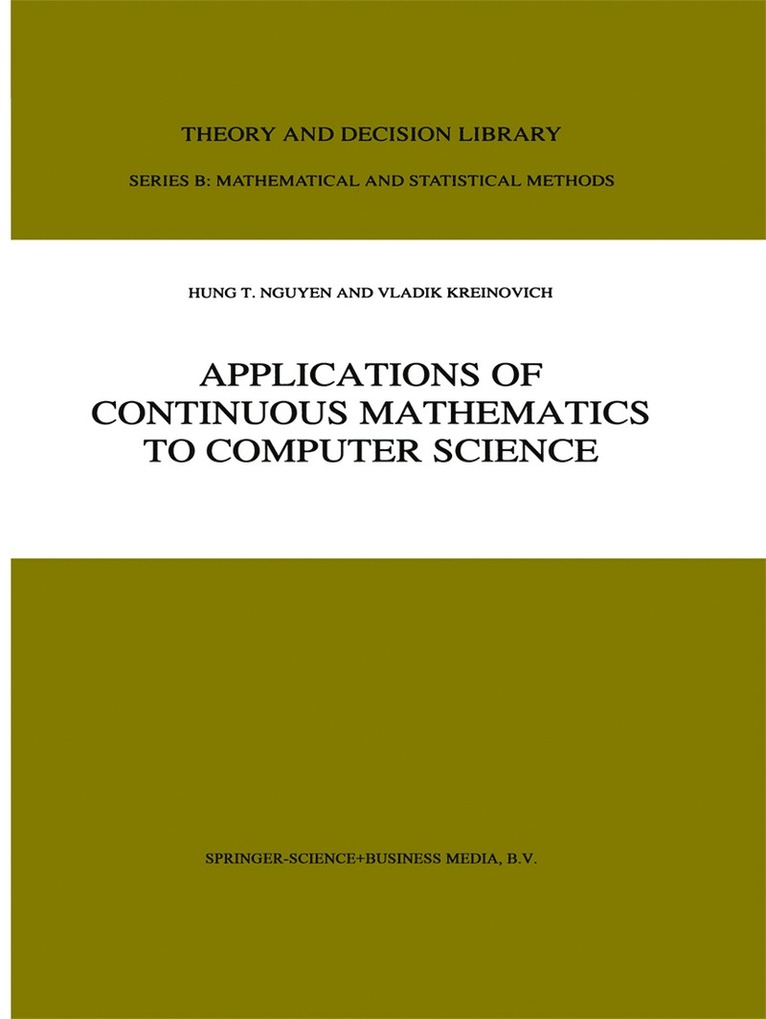
Applications of Continuous Mathematics to Computer Science
Hung T. Nguyen, V. Kreinovich
Inbunden, 1997
2 949 kr
Del 43
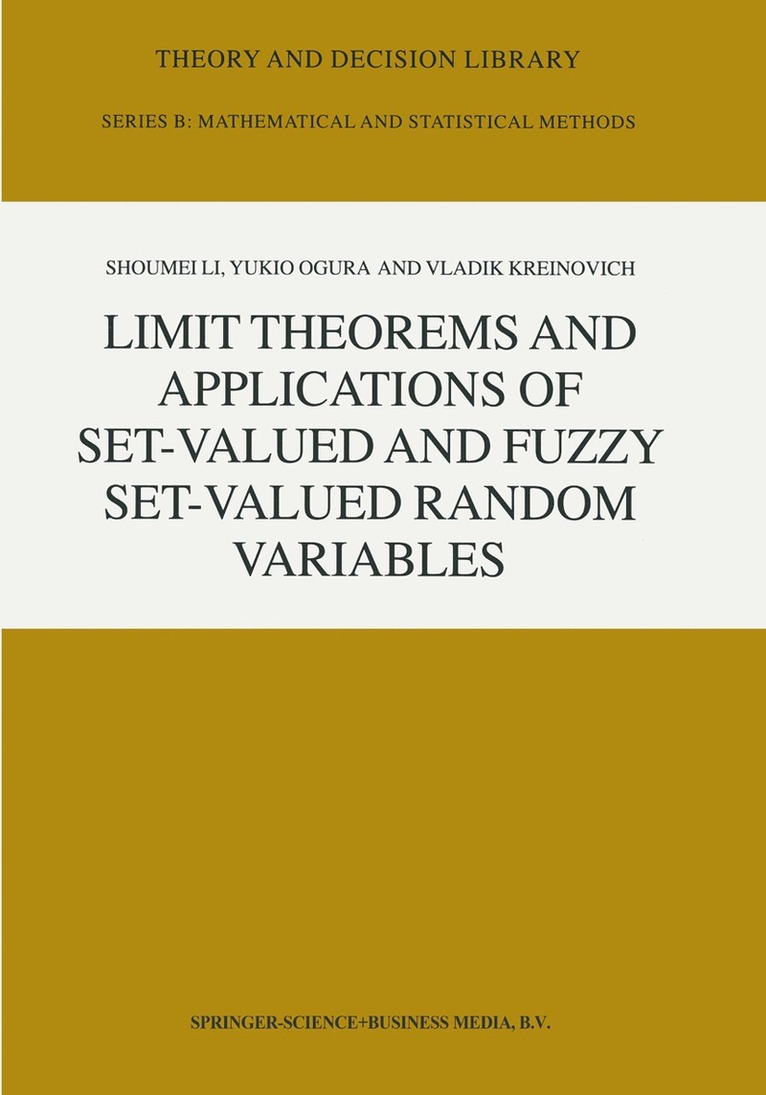
Limit Theorems and Applications of Set-Valued and Fuzzy Set-Valued Random Variables
Shoumei Li, Y. Ogura, V. Kreinovich
Inbunden, 2002
1 439 kr
Del 3
Del 38
Applications of Continuous Mathematics to Computer Science
Hung T. Nguyen, V. Kreinovich
Häftad, 2010
2 859 kr
Limit Theorems and Applications of Set-Valued and Fuzzy Set-Valued Random Variables
Shoumei Li, Y. Ogura, V. Kreinovich
Häftad, 2010
1 439 kr
Hoppa över listan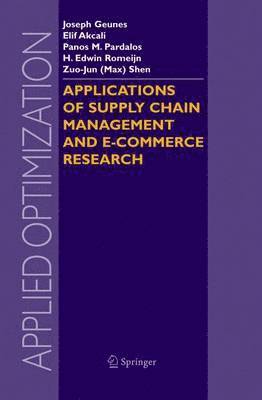
Mer från samma serie
Del 92
Applications of Supply Chain Management and E-Commerce Research
Joseph Geunes, Elif Akçali, Panos M. Pardalos, H. Edwin Romeijn, Zuo-Jun (Max) Shen
Inbunden, 2004
1 439 kr
Del 98
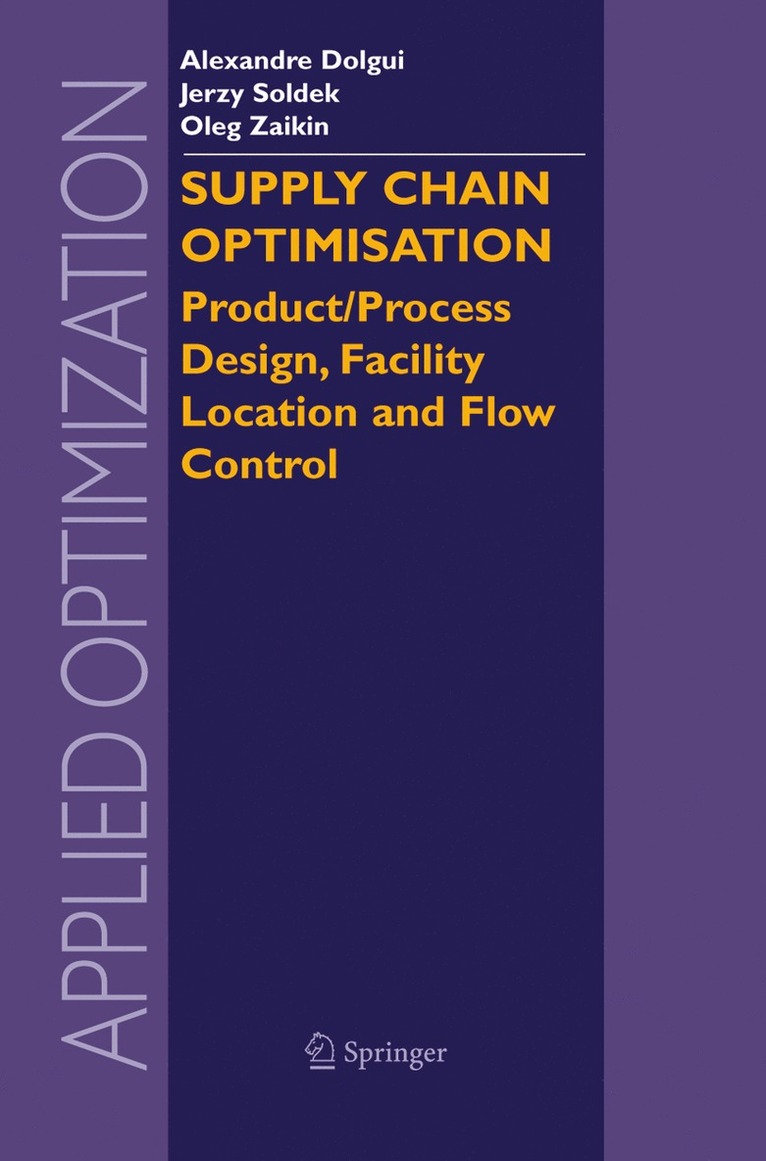
Mathematical and Computational Models for Congestion Charging
Siriphong Lawphongpanich, Donald W. Hearn, Michael J. Smith
Inbunden, 2006
1 479 kr
Del 1
Hoppa över listan



Du kanske också är intresserad av
Computational Complexity and Feasibility of Data Processing and Interval Computations
V. Kreinovich, A.V. Lakeyev, J. Rohn, P.T. Kahl
Inbunden, 1997
2 859 kr
Limit Theorems and Applications of Set-Valued and Fuzzy Set-Valued Random Variables
Shoumei Li, Y. Ogura, V. Kreinovich
Häftad, 2010
1 439 kr
Applications of Continuous Mathematics to Computer Science
Hung T. Nguyen, V. Kreinovich
Inbunden, 1997
2 949 kr
Del 43
Limit Theorems and Applications of Set-Valued and Fuzzy Set-Valued Random Variables
Shoumei Li, Y. Ogura, V. Kreinovich
Inbunden, 2002
1 439 kr
Del 3
Del 38
Applications of Continuous Mathematics to Computer Science
Hung T. Nguyen, V. Kreinovich
Häftad, 2010
2 859 kr
- Nyhet
Del 3
- Nyhet
Del 11
- Nyhet
Domino : Dåren, domaren och den välkammade mannen från pirayaministeriet
Håkan Nesser
Inbunden, 2026
289 kr329 kr