
CLUSTERING AND CLASSIFICATION
Inbunden, Engelska, 1996
3 259 kr
Beställningsvara. Skickas inom 3-6 vardagar. Fri frakt för medlemmar vid köp för minst 249 kr.
Finns i fler format (1)
At a moderately advanced level, this book seeks to cover the areas of clustering and related methods of data analysis where major advances are being made. Topics include: hierarchical clustering, variable selection and weighting, additive trees and other network models, relevance of neural network models to clustering, the role of computational complexity in cluster analysis, latent class approaches to cluster analysis, theory and method with applications of a hierarchical classes model in psychology and psychopathology, combinatorial data analysis, clusterwise aggregation of relations, review of the Japanese-language results on clustering, review of the Russian-language results on clustering and multidimensional scaling, practical advances, and significance tests.
Produktinformation
- Utgivningsdatum1996-01-01
- Mått157 x 235 x 37 mm
- Vikt1 221 g
- FormatInbunden
- SpråkEngelska
- Antal sidor500
- FörlagWorld Scientific Publishing Co Pte Ltd
- ISBN9789810212872
Tillhör följande kategorier
Hoppa över listan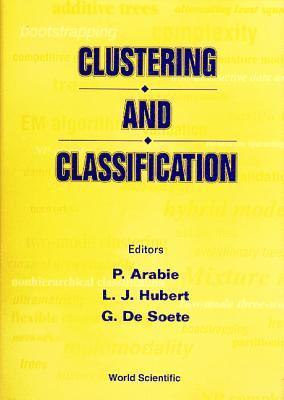


Du kanske också är intresserad av
Del 60
New Developments in Psychological Choice Modeling
Geert De Soete, Soete G. De Soete G., G. de Soete, H. Feger, K.C. Klauer
Inbunden, 1989
2 209 kr
- Nyhet
Del 4

- Nyhet
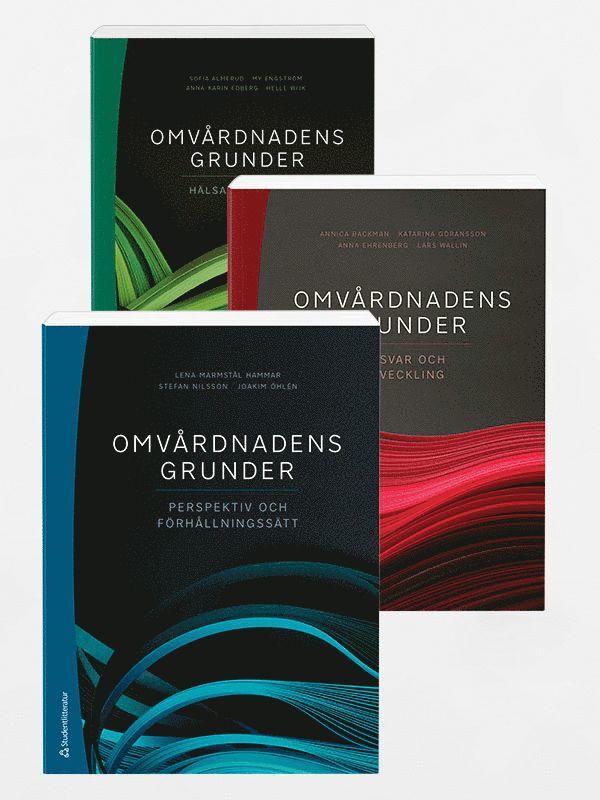
Omvårdnadens grunder - paket
Sofia Almerud, Annica Backman, Anna-Karin Edberg, Anna Ehrenberg, My Engström, Katarina Göransson, Lena Marmstål Hammar, Stefan Nilsson, Lars Wallin, Helle Wijk, Joakim Öhlén, Lilas Ali, Anette Alvariza, Ann-Christine Andersson, Pia Andersson, Anna Anåker, Charlotta van Eggermont Arwidson, Margareta Asp, Åsa Audulv, Malin Axelsson, Mariette Bengtsson, Eva Benzein, Lena Berg, Monica Bergqvist, Eva-Karin Bergström, Ida Björkman, Catrin Björvell, Angela Bång, Carina Bååth, Josefin Bäckström, Karin Bölenius, David Edvardsson, Rakel Eklund, Inger Ekman, Mirjam Ekstedt, Ann Catrine Eldh, Karin Enskär, Sofia Erestam, Anneli Eriksson, Henrik Eriksson, Marie Ernsth Bravell, Jan Florin, Anna Forsberg, Henrietta Forsman, Anette Forss, Mio Fredriksson, Febe Friberg, Maria Grandahl, Tanja Gustafsson, Agneta Gånemo, Elizabeth Hanson, Malin Hansson, Amanda Hellström, Ingela Henoch, Inger Jansson, Maria Jirwe, Lena Johansson, Pauline Johansson, Unn-Britt Johansson, Birgitta Kerstis, Ann-Sofie Källberg, Ulrika Källman, Anita Kärner Köhler, Cecilia Larsdotter, Margret Lepp, Maria Lindström Nilsson, Mikael Lundmark, Anneli Löf, Lennart Magnusson, Catharina Melander, Jenny Milton, Beata Molin, Annika Nordin, Maria Norinder, Sepideh Olausson, Carina Persson, Kerstin Prignitz Sluys, Josefin Rahmqvist, Birgit Holritz Rasmussen, Anneli Ringblom, Karin C. Ringsberg, Ann Rudman, Ann-Marie Rydholm Hedman, Silje Rysst, Lars Sandman, Regina Santamäki Fischer, Britt-Inger Saveman, Johanna Sjömar, Karin Stenzelius, Anna Strömberg, Annelie J. Sundler, Märtha Sund Levander, Kristina Svantesson, Anna Swall, Susanne Syrén, Pia Tingström, Johanna Ulfvarson, Sara Wallström, Albert Westergren, Lena Wiklund Gustin, Ulrika Winblad
Häftad, 2025
1 569 kr