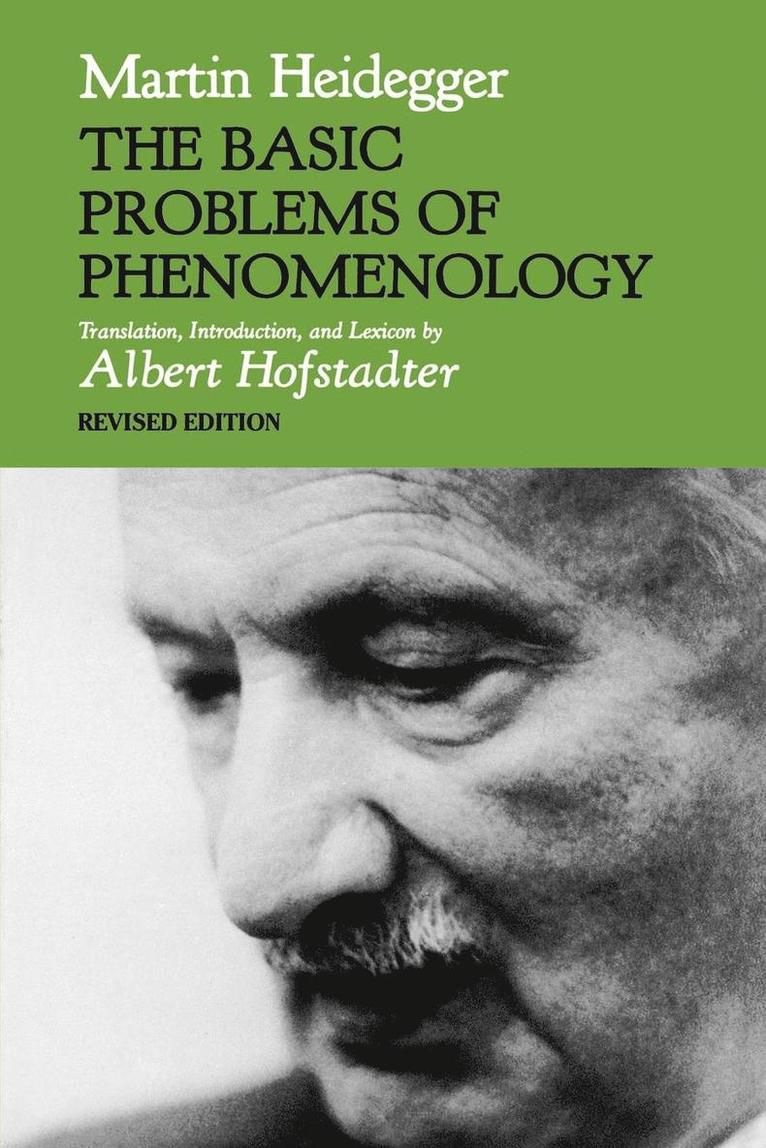
Del i serien Studies in Continental Thought
Basic Concepts
219 kr
Beställningsvara. Skickas inom 10-15 vardagar. Fri frakt för medlemmar vid köp för minst 249 kr.
Produktinformation
- Utgivningsdatum1998-07-22
- Mått140 x 210 x undefined mm
- Vikt177 g
- FormatHäftad
- SpråkEngelska
- SerieStudies in Continental Thought
- Antal sidor128
- FörlagIndiana University Press
- ISBN9780253212153
Tillhör följande kategorier
Gary E. Aylesworth teaches philosophy at Eastern Illinois University.
- Translator's ForewordIntroduction: The Internal Connection between Ground-Being-Inception1. Elucidation of the title of the lecture "Basic Concepts"Recapitulation1. Our understnading of "basic concepts" and our relation to them as an anticipatory knowing2. The decay of knowing in the present age: The decision in favor of the useful over what we can do without3. The inception as a decision about what is essential in Western history (in modern times: unconditional will and technology)4. Practicing the relation to what is "thought-worthy" by considering the ground5. The essential admittance of historical man into the inception, into the "essence" of groundPart One: Considering the Saying. The Differnce between Beings and BeingFirst Division: Discussion of the "Is", of Beings as a Whole2. Beings as a whole are actual, possible, necessary3. Nonconsideration of the essential distinction between being and beings4. The nondiscoverability of the "is"5. The unquestioned character of the "is" in its grammatical determination—emptiness and richness of meaning6. The solution of healthy common sense: Acting and effecting amoung beings instead of empty thinking about being (workers and soldiers)7. Renouncing being—dealing with beingsRecapitulation1. Consideration of beings as whole presupposes the essential inclusion of man in the difference betwen being and beings2. Wealth and poverty of meanin in the "is"3. Equating dealing with the actual with considering begins as a whole4. The unthought residence of man in the distinction between being and beingsSecond Division: Guidewords for Reflection upon Being8. Being is the emptiest and at the same time a surplus9. Being is the most common and at the same time unique10. Being is the most intelligible and at the same time concealment11. Being is the most worn-out and at the smae time the origin12. Being is the most reliable and at the same time the non-ground13. Being is the most said and at the same time a keeping silent14. Being is the most forgotten and at the same time remembrance15. Being is the most constraining and at the same time liberation16. Unifying reflection upon being in the sequence of quidewordsRecapitulationGuidewords about Being1. Being is empty as an abstract concept and at the same time a surplus2. Being is the most common of all and at the same time uniqueness (The sameness of being and nothing)3. The meaning of the quidewords: Instructions for reflection upon the difference between being and beingsThird Division: Being and Man17. The ambivalence of being and the essence of man: What casts itself toward us and is cast away18. The historicality of being and the historically esstential abode of man19. Remembrance into the first inception of Western thinking is reflection upon being, is grasping the groundRecapitulation1. The discordant essence in the relation of man to being: The casting-toward and casting-away of being2. Remembrance into the first inception is placement into still presencing being, is grasping it as the groundPart Two: The Incipient Saying of Being in the Fragment of Anaximander20. The conflicting intentions of philological tradition and philosophical translation21. Nietzsche's and Diels's renderings of the fragment as the standard for interpretations current todayRecapitulationThe remembering return into the inception of Western thinking—listening to the fragment of Anaximander22. Reflection upon the incipient saying of being in the fragment of Anaximander23. Excursus: Insight into the with the help of another word from Anaximander24. The second sentence thinks being in correspondence with its essence as presencing, abiding, time25. The relation of both sentences to one another: The fragment as the incipient saying of beingEditor's EpilogueGlossary
"This translation . . . enlarges our historical view of the probing advances in Heidegger's thought."—International Studies in Philosophy"Heidegger's method is unmistakable in these lectures. . . . This is thinking that is alive, always green."—Review of Metaphysics"This translation is an excellent and accessible introduction to the later Heidegger. Published posthumously in 1981 as Grundbegriffe, this 1941 lecture series is an important marker in Heidegger's thinking and gives us access to his respelling out of the question of being and time. Here he sets forth eight guidewords that seem to be irresolvably contradictory assertions about being. The fact that being eludes modern reflection leads Heidegger to return to the beginnings of Western philosophical thought in search of the fateful decision about how being was to be thought—and by extension, how human being was to be defined. He asks, What if all previous answers to the questions of who we are were merely the repeated application of a [fatefully wrong] answer given long ago? While Heidegger spells out more fully his critique of humanist definitions of man in Letter on Humanism (1947), the present text shows us how his view there arises out of the quest for the meaning of being in the face of our modern forgetfulness of the ontological difference. In the second part of this work, Heidegger turns to two fragments from Anaximander, which, taken together in his interpretation, articulate at the very dawn of Western philosophy an initial saying of being and time together as timely emergence. Aylesworth's well—translated edition is essential for undergraduate libraries, recommended also for general readers, graduate students, faculty.June 1994"—R. E. Palmer, MacMurray
Mer från samma författare
Phanomenologische Interpretationen Zu Aristoteles: (Anzeige Der Hermeneutischen Situation)
Martin Heidegger, Gunther Neumann
Häftad
249 kr
Du kanske också är intresserad av
Conceptual Structures: Theory, Tools and Applications
Marie-Laure Mugnier, Michel Chein
Häftad, 1998
719 kr