
Del i serien Perspectives in Economic and Social History
Agriculture and the Great Depression
The Rural Crisis of the 1930s in Europe and the Americas
Inbunden, Engelska, 2022
2 809 kr
Beställningsvara. Skickas inom 10-15 vardagar. Fri frakt för medlemmar vid köp för minst 249 kr.
What role did the agricultural sector play in the economic crash of 1929? Taking evidence from country cases across Europe and the Americas, this edited volume explores short-, medium- and long- term perspectives on the primary sector.The monograph brings together the voices of an international panel of contributors who examine issues such as falling prices, industrial production, unemployment and the stagnation of aggregate demand. Together, they frame the interwar period as a pivotal turning point in the decline of subsistence agriculture and the growth of agricultural subsidies, which remain a key policy tool in many economies today.This illuminating book will be of interest to advanced students and researchers in economic history, agricultural history, globalization and economic development.
Produktinformation
- Utgivningsdatum2022-12-14
- Mått156 x 234 x 22 mm
- Vikt600 g
- FormatInbunden
- SpråkEngelska
- SeriePerspectives in Economic and Social History
- Antal sidor280
- FörlagTaylor & Francis Ltd
- ISBN9780367615505
Tillhör följande kategorier
Hoppa över listan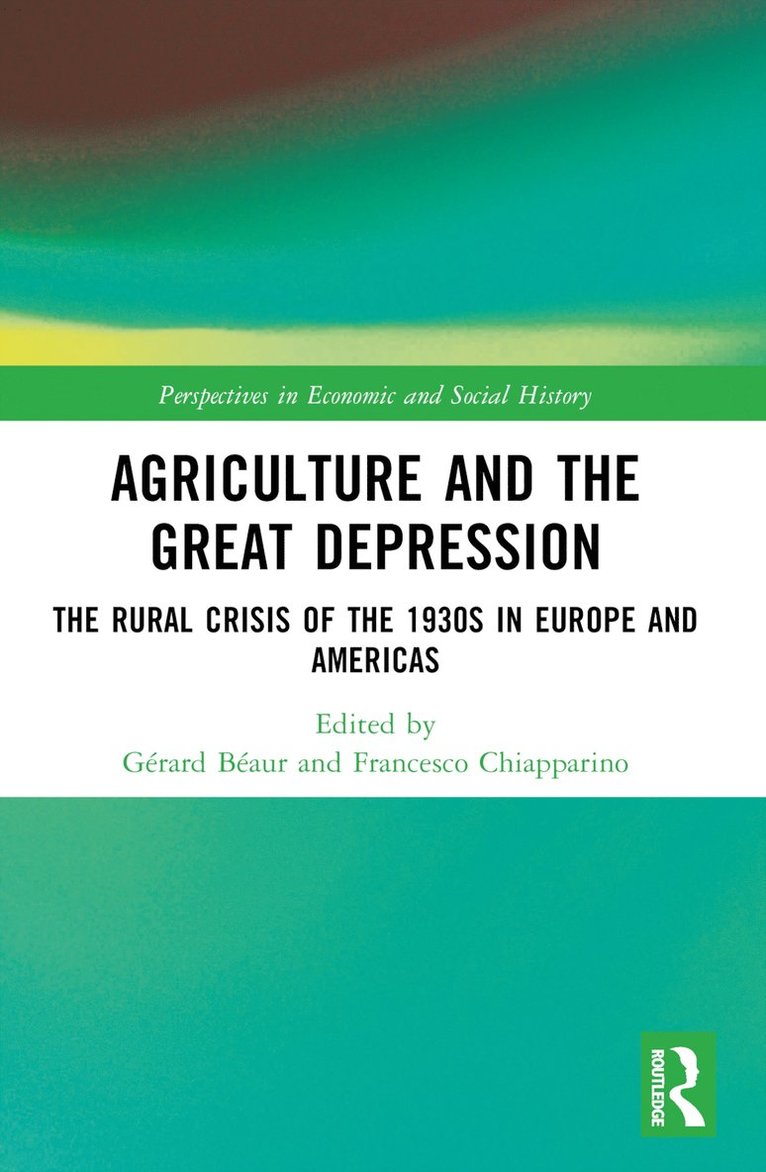









Du kanske också är intresserad av
- Nyhet
Del 3
- Nyhet
Del 11
- Nyhet
Del 6
- Nyhet
Del 4
Del 3
Del 1
Del 7