
U.S. Nuclear Diplomacy with Iran
From the War on Terror to the Obama Administration
Inbunden, Engelska, 2015
1 539 kr
Beställningsvara. Skickas inom 10-15 vardagar. Fri frakt för medlemmar vid köp för minst 249 kr.
The United States’ commitment to non-proliferation often propels its foreign policy rhetoric. In 2002, George W. Bush framed his goal of preventing the spread of nuclear weapons within the context of the global war on terror, accusing Iran of being part of the “Axis of Evil.” Iran’s nuclear program was declared an intolerable threat to global peace and stability. This approach however showed the conflict between the rhetoric of good vs. evil and the need for a pragmatic and measured approach to non-proliferation in the Middle East. The book explores this divergence between the alarmist rhetoric of the Bush Administration’s public diplomacy and its actual non-proliferation policy toward Iran. It shows how the two policy directions, the war on terror and negotiations over the nuclear issue, were often at odds. Further, the Administration’s desire to change the regime in Iran undermined efforts to find a diplomatic solution to the nuclear issue. Ultimately, the policies implemented failed both to shut down Iran’s nuclear program and bring significant democratic reform within the Islamic Republic. The book also examines this legacy and how Obama’s approach differs or follows that of his predecessor. Lastly, the implications for non-proliferation policies beyond Iran are discussed, as nuclear proliferation remains a key concern in a Middle East plagued by instability.
Produktinformation
- Utgivningsdatum2015-12-24
- Mått157 x 239 x 19 mm
- Vikt417 g
- FormatInbunden
- SpråkEngelska
- SerieWeapons of Mass Destruction and Emerging Technologies
- Antal sidor202
- FörlagBloomsbury Publishing Plc
- ISBN9781442252110
Tillhör följande kategorier
Hoppa över listan



Mer från samma serie
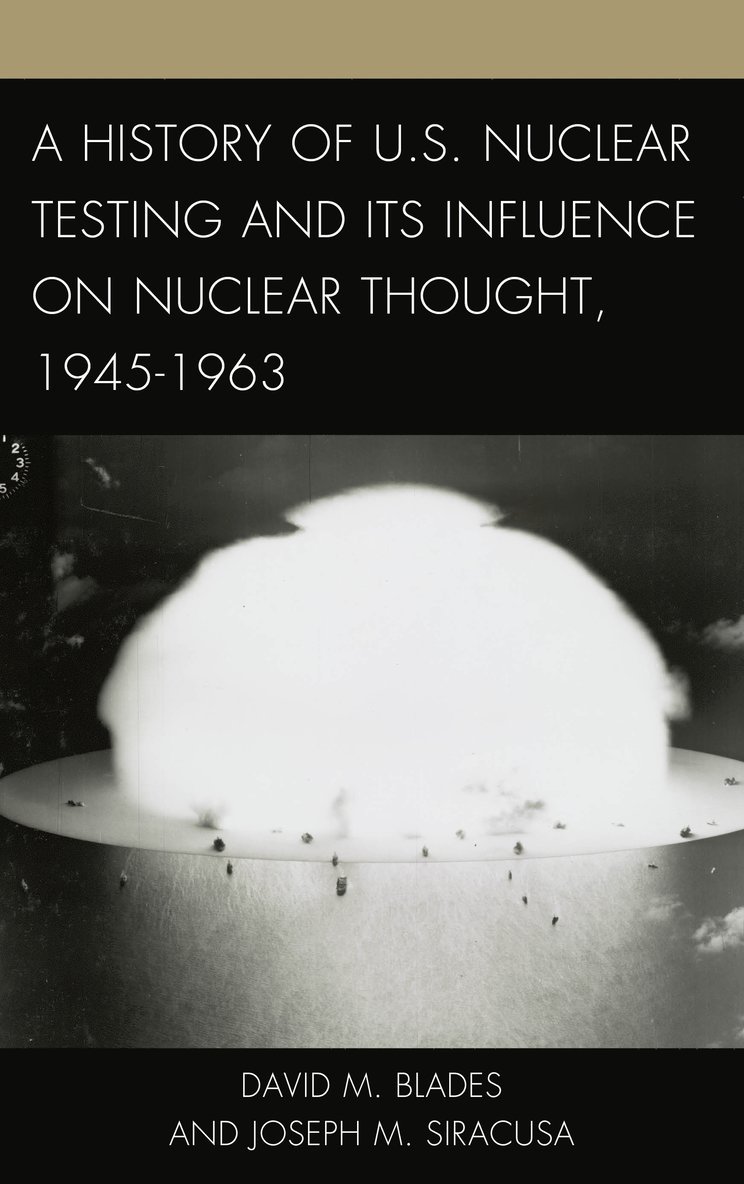
History of U.S. Nuclear Testing and Its Influence on Nuclear Thought, 1945–1963
David M. Blades, Joseph M. Siracusa
Inbunden, 2014
2 059 kr