Skickas . Fri frakt för medlemmar vid köp för minst 249 kr.
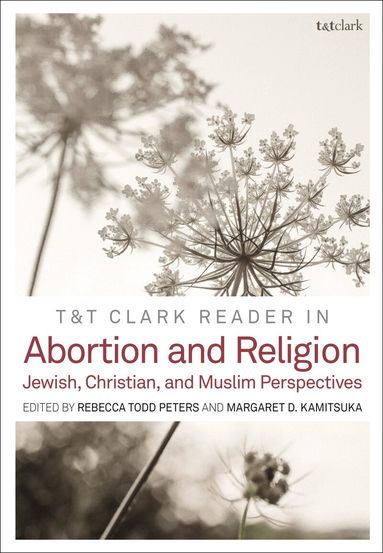
This volume introduces students to the history of cultural and theological responses to abortion as background for understanding a diversity of ethical positions in contemporary Christian, Jewish, and Muslim writings. Politicized debates about abortion are often presented in terms of a binary rhetoric of prolife versus prochoice; however, this collection of essays shows how that binary often breaks down when abortion is seen from different religious perspectives and in light of the voices of women themselves. While abortion is a global phenomenon, this volume focuses on the U.S. context. American abortion politics and culture wars have been dominated by Christian voices; nevertheless, Jewish and Muslim abortion ethics engage many of the same issues from different cultural and religious perspectives. Finally, this volume presents important examples of recent social scientific studies about the relationship of religion and abortion in the diverse cultural, racial, and economic fabric of American society.Pedagogical features include:- Introduction to the subject matter by the editors- Introductory essays to all five parts of the book- Questions for classroom discussionAdditional pedagogical materials can be found at: https://abortionreligionreader.com/
Rebecca Todd Peters is Professor of Religious Studies and Director of the Poverty and Social Justice Program at Elon University, USA.Margaret D. Kamitsuka is Francis W. and Lydia L. Davis Professor Emeritus of Religion at Oberlin College, USA.
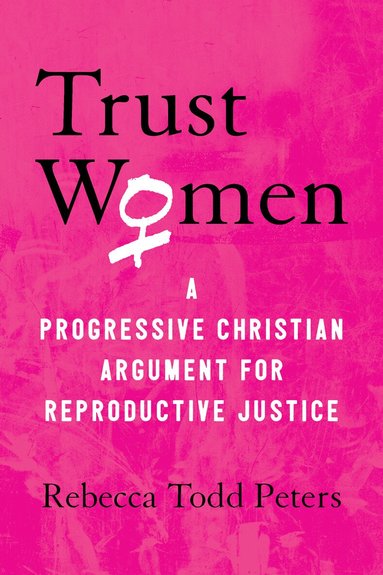
INTRODUCTIONPART ONE – In Their Own WordsIntroduction to Part 1‘América Gonzalez’, So Many Lives at StakeAnonymous, In the Shade of Allah’s MercyKate Ott, Reproducing Justice CoWanda Rusk, Christ Was There for Me During My Abortion Rachael Pass, Lo Teivoshi, You Will Not Feel Ashamed‘Alex’ (with Meera Shah), You’re the Only One I’ve Told PART TWO – Social Scientific StudiesIntroduction to Part 2M. Antonia Biggs, et al., Understanding Why Women Seek Abortions Kate Cockrill and Adina Nack, ‘I’m Not That Type of Person’Jennifer Kerns, et al., Women's Decision Making Regarding Choice of Second Trimester Termination Method for Pregnancy Complications Ellen Wiebe, et al., Muslim Women Having Abortions in Canada: Attitudes, Beliefs, and ExperiencesElly Teman, et al., Ultra-Orthodox Jewish Women Navigating the Uncertainty of Pregnancy and Prenatal DiagnosisRobert P. Jones, et al., The State of Abortion and Contraception Attitudes in All 50 StatesJohn P. Bartkowski, et al., Faith, Race-Ethnicity, and Public Policy Preferences: Religious Schemas and Abortion Attitudes Among U.S. LatinosBohsiu Wu and Aya Kimura Ida, Ethnic Diversity, Religion, and Opinions toward Legalizing Abortion: The Case of Asian Americans PART THREE – History and ContextIntroduction to Part 3A. James Murphy, Undesired Offspring and Child Endangerment in Jewish AntiquityBeverly Wildung Harrison, Selected Early Catholic Teaching on AbortionZubin Mistry, Imagining Abortivi in the Early Middle AgesMohammed Ghaly, Pre-modern Islamic Medical Ethics and Graeco-Islamic-Jewish Embryology Ignacio Castuera, Abortion and Law in the High Middle AgesKathryn Blanchard, Contraception in Protestant TheologyDorothy E. Roberts, Reproduction in BondagePaul Saurette and Kelly Gordon, The AMA’s Crusade Against AbortionLoretta J. Ross, Reproductive Justice and Eugenics D. Marie Ralstin-Lewis, The Continuing Struggle against Genocide: Indigenous Women's Reproductive RightsPART FOUR – Religious Arguments about AbortionIntroduction to Part 4JudaismDavid Feldman, Abortion: The Jewish ViewDavid Kraemer, Jewish Ethics and AbortionY. Michael Barilan, Her Pain Prevails and Her Judgement Respected--Abortion in JudaismDena S. Davis, Abortion in Jewish Thought ChristianityNorman Ford, The Human Embryo as Person in Catholic TeachingJason T. Eberl, Aquinas’s Account of Human Embryogenesis and Recent InterpretationsRoy Bowen Ward, The Use of the Bible in the Abortion DebateC. Ben Mitchell, The Value of Every Human LifeGreek Orthodox Archdiocese of America, For the Life of The World: Toward a Social Ethos of the Orthodox ChurchPatricia Beattie Jung, Abortion and Organ DonationRebecca Todd Peters, Motherhood as Moral ChoiceMargaret D. Kamitsuka, Contesting Abortion as SinToni Bond, A Womanist Theo-Ethic of Reproductive Justice Islam Kiarash Aramesh, Shiite Perspective on the Moral Status of the Early Human Embryo Abdulrahman Al-Matary & Jaffar Ali, Controversies and Considerations Regarding the Termination of Pregnancy for Foetal Anomalies in IslamMarion Holmes Katz, Sufi Ethics: Legal Rulings in Religious ContextSa’diyya Shaikh, Family Planning, Contraception and Abortion in IslamPART FIVE – Abortion and Religion in Public LifeIntroduction to Part 5Doris Andrea Dirks and Patricia Relf, A History of the Clergy Consultation Service on Abortion: The CounselorsPatricia Miller, The Battle Over Abortion in the Catholic ChurchStacy A. Scaldo, Roe v. Wade: Setting the Stage for Pro-Choice Religion-Based HoldingsRachel Kranson, The Women's League for Conservative Judaism and the Politics of Abortion, 1970-1982Aaron Winter, Mainstream, Militant and Extremist Anti-Abortion ActivismBryan M. Massingale, The Rhetoric of Slavery in the Pro-Life Discourse of U.S. BishopsZiad Munson, Framing Choice: CPCS [Crisis Pregnancy Centers] and the Co-optation of FreedomLori R. Freedman, et al., When There's a Heartbeat: Miscarriage Management in Catholic-owned HospitalsBernard G. Prusak, Double Effect, All Over Again: The Case of Sister Margaret McBride Shyrissa Dobbins-Harris, The Myth of Abortion as Black GenocideMonique Moultrie, #BlackBabiesMatter: Analyzing Black Religious Media in Conservative and Progressive Evangelical CommunitiesL. L.Wynn and Angel M. Foster, Muftis in the Matrix: Comparing Online English-and Arabic-Language Fatwas about Emergency ContraceptionBibliographyIndex
The anthology provides a detailed, scholarly, and entertaining overview of the relationship between abortion and religion in the US context. It is characterized by a variety of historical, sociological, and theological approaches and “ideological” perspectives that allow for a differentiated view of the phenomenon.