
The Divine Comedy of Dante Alighieri
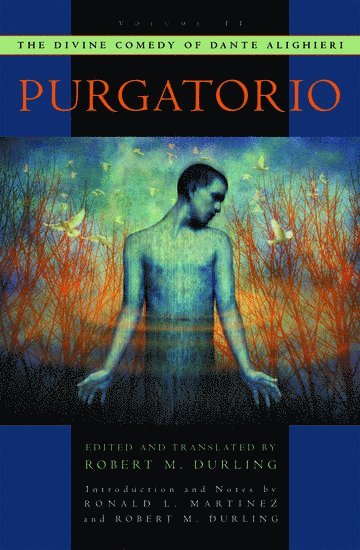
Volume 2: Purgatorio
Inbunden, Engelska, 2003
1 439 kr
Beställningsvara. Skickas inom 5-8 vardagar. Fri frakt för medlemmar vid köp för minst 249 kr.
Finns i fler format (3)
In the early 1300s, Dante Alighieri set out to write the three volumes which make the up The Divine Comedy. Purgatorio is the second volume in this set and opens with Dante the poet picturing Dante the pilgrim coming out of the pit of hell. Similar to the Inferno (34 cantos), this volume is divided into 33 cantos, written in tercets (groups of 3 lines). The English prose is arranged in tercets to facilitate easy correspondence to the verse form of the Italian on the facing page, enabling the reader to follow both languages line by line. In an effort to capture the peculiarities of Dante's original language, this translation strives toward the literal and sheds new light on the shape of the poem. Again the text of Purgatorio follows Petrocchi's La Commedia secondo l'antica vulgata, but the editor has departed from Petrocchi's readings in a number of cases, somewhat larger than in the previous Inferno, not without consideration of recent critical readings of the Comedy by scholars such as Lanza (1995, 1997) and Sanguineti (2001). As before, Petrocchi's punctuation has been lightened and American norms have been followed. However, without any pretensions to being "critical", the text presented here is electic and being not persuaded of the exclusive authority of any manuscript, the editor has felt free to adopt readings from various branches of the stemma. One major addition to this second volume is in the notes, where is found the Intercantica - a section for each canto that discusses its relation to the Inferno and which will make it easier for the reader to relate the different parts of the Comedy as a whole.
Produktinformation
- Utgivningsdatum2003-04-17
- Mått164 x 243 x 51 mm
- Vikt1 089 g
- FormatInbunden
- SpråkEngelska
- Antal sidor720
- FörlagOUP USA
- IllustratörRobert Turner
- ISBN9780195087413
- ÖversättareRobert M. Durling
Tillhör följande kategorier
Hoppa över listan
Mer från samma författare
The Divine Comedy: Inferno; Purgatorio; Paradiso (in One Volume); Introduction by Eugenio Montale
Dante Alighieri
Inbunden, 1995
609 kr
Hoppa över listan

Du kanske också är intresserad av
The Divine Comedy of Dante Alighieri
Dante Alighieri, Ronald L. Martinez, Ronald L Martinez, Robert M Durling
Inbunden, 1996
999 kr
The Divine Comedy of Dante Alighieri
Dante Alighieri, Robert Durling, Ronald Martinez
Inbunden, 2011
1 709 kr
The Divine Comedy of Dante Alighieri
Ronald L. Martinez, Dante Alighieri, Robert M. Durling
Häftad, 2013
1 019 kr
The Divine Comedy of Dante Alighieri
Dante Alighieri, Robert M. Durling, Robert M Durling, Ronald L Martinez
Häftad, 1997
249 kr
The Divine Comedy of Dante Alighieri: 3 Volume Set
Dante Alighieri, Robert M. Durling
Inbunden
1 649 kr
Cleansing the Temple: Dante, Defender of the Church
Ronald L. Martinez, Olivia Holmes
Häftad, 2017
339 kr