
(Post-)colonial Archipelagos
Comparing the Legacies of Spanish Colonialism in Cuba, Puerto Rico, and the Philippines
Inbunden, Engelska, 2022
1 589 kr
Skickas . Fri frakt för medlemmar vid köp för minst 249 kr.
Finns i fler format (1)
The Puerto Rican debt crisis, the challenges of social, political, and economic transition in Cuba, and the populist politics of Duterte in the Philippines—these topics are typically seen as disparate experiences of social reality. Though these island territories were colonized by the same two colonial powers—by the Spanish Empire and, after 1898, by the United States—research in the fields of history and the social sciences rarely draws links between these three contexts.Located at the intersection of Postcolonial Studies, Latin American Studies, Caribbean Studies, and History, this interdisciplinary volume brings together scholars from the US, Europe, Latin America, the Caribbean, and the Philippines to examine the colonial legacies of the three island nations of Cuba, Puerto Rico, and the Philippines. Instead of focusing on the legacies of US colonialism, the continuing legacies of Spanish colonialism are put center-stage. The analyses offered in the volume yield new and surprising insights into the study of colonial and postcolonial constellations that are of interest not only for experts, but also for readers interested in the social, political, economic, and cultural dynamics of Cuba, Puerto Rico, and the Philippines during Spanish colonization and in the present. The empirical material profits from a rigorous and systematic analytical framework and is thus easily accessible for students, researchers, and the interested public alike.
Produktinformation
- Utgivningsdatum2022-02-22
- Mått152 x 229 x 31 mm
- Vikt742 g
- FormatInbunden
- SpråkEngelska
- Antal sidor382
- FörlagThe University of Michigan Press
- ISBN9780472133161
Tillhör följande kategorier
Hoppa över listan


Mer från samma författare
Wealth, Development, and Social Inequalities in Latin America
Hans-Jürgen Burchardt, Irene Lungo Rodríguez
Inbunden, 2023
3 209 kr
Wealth, Development, and Social Inequalities in Latin America
Hans-Jürgen Burchardt, Irene Lungo Rodríguez
Häftad, 2024
829 kr
Political Economy of the Energy Transition in Latin America
Hannes Warnecke-Berger, Hans-Jürgen Burchardt
Inbunden, 2026
3 209 kr
Del 49
Grüne Energiewende in Lateinamerika
Hans-Jürgen Burchardt, Kristina Dietz, Hannes Warnecke-Berger
Häftad, 2025
409 kr
Del 51
Die politische Rechte in Lateinamerika
Nadja Ahmad, Hans-Jürgen Burchardt, Kristina Dietz, Hannes Warnecke-Berger, Jonas Wolff
Häftad, 2026
479 kr
Hoppa över listan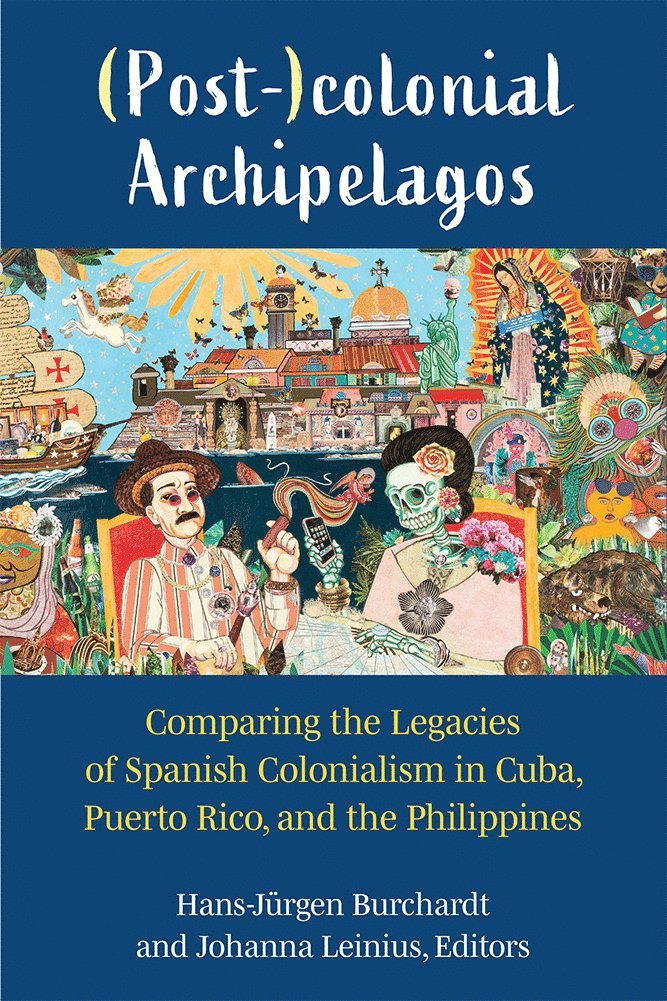


Du kanske också är intresserad av
Wealth, Development, and Social Inequalities in Latin America
Hans-Jürgen Burchardt, Irene Lungo Rodríguez
Häftad, 2024
829 kr
Wealth, Development, and Social Inequalities in Latin America
Hans-Jürgen Burchardt, Irene Lungo Rodríguez
Inbunden, 2023
3 209 kr
Knowledge, Normativity and Power in Academia
Gianna Magdalena Schlichte, Aisha-Nusrat Ahmad, Maik Fielitz, Johanna Leinius
Häftad, 2019
619 kr
Negotiating Normativity
Nikita Dhawan, Elisabeth Fink, Johanna Leinius, Rirhandu Mageza-Barthel
Inbunden, 2016
1 439 kr
Negotiating Normativity
Nikita Dhawan, Elisabeth Fink, Johanna Leinius, Rirhandu Mageza-Barthel
Häftad, 2018
1 439 kr
Del 34
Politik und Geschlecht
Christine M. Klapeer, Johanna Leinius, Franziska Martinsen, Heike Mauer, Inga Nüthen
Inbunden, 2024
869 kr