Beställningsvara. Skickas inom 10-15 vardagar. Fri frakt för medlemmar vid köp för minst 249 kr.
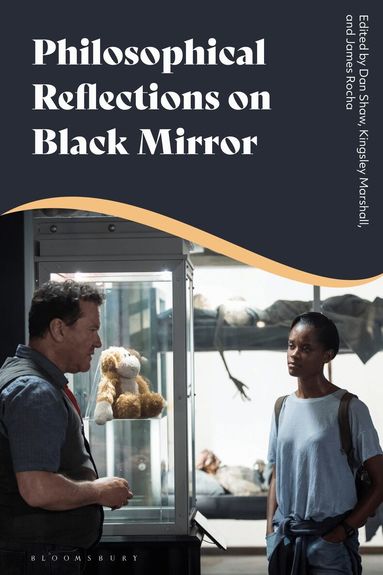
Black Mirror is a cultural phenomenon. It is a creative and sometimes shocking examination of modern society and the improbable consequences of technological progress. The episodes - typically set in an alternative present, or the near future - usually have a dark and satirical twist that provokes intense question both of the self and society at large. These kind of philosophical provocations are at the very heart of the show. Philosophical reflections on Black Mirror draws upon thinkers such as Friedrich Nietzsche, Pierre Hadot and Michel Foucault to uncover how Black Mirror acts as ‘philosophical television’ questioning human morality and humanity’s vulnerability when faced with the inexorable advance of technology.
Kingsley Marshall is Head of Film & Television at the CILECT accredited School of Film & Television, and a member of the project team at the Sound/Image Cinema Lab, both based at Falmouth University, UK. James Rocha is Associate Professor of Philosophy at California State University, Fresno, USA.
Introduction: Charlie Brooker’s Artistic VisionKingsley Marshall (Falmouth University, UK) & James Rocha (California State University: Fresno, USA) Section One: Is Black Mirror Philosophy?Chapter One: Through a Screen Darkly: Black Mirror, Thought Experiments, and Televisual PhilosophyRobert Sinnerbrink, Macquarie University, AustraliaChapter Two: Black Mirror as Philosophizing About Immortality, Technology and Human Nature Lorraine Yeung, Hong Kong Baptist University, Hong Kong, and Kong-Ngai Pei, Hong Kong Polytechnic University, Hong Kong Chapter Three: Technology in Pastel Colors: An Alternative Take on Black MirrorLaura di Summa, William Paterson University, USA Chapter Four: The Virtue of Forgetting in Nietzsche’s Philosophy and Black Mirror Daniel Shaw, Emeritus Professor Lock Haven University, USA Section Two: Versions of the Self in Black Mirror Chapter Five: Free Will in ‘Black Mirror: Bandersnatch’ Sander Lee, Keene State College, USA Chapter Six: ‘White Christmas’: Technologies of the Self in the Digital Age Diana Stypinska, Liverpool Hope University, U.K. and Andrea Rossi, Koç University (Istanbul), Turkey Chapter Seven: You Were Never Really Here: Representations of Artificial Intelligence in Charlie Brooker’s Black MirrorKingsley Marshall, Falmouth University, UKSection Three: Black Mirror and Relating to OthersChapter Eight: ‘Crocodile’ Going Too Far: Philosophical Reflections on Human Nature and Moral Character Clara Nisley, Oglethorpe University, USA Chapter Nine: Rats, Roaches, and Rapists: ‘Men Against Fire’ and the Propagation of PropagandaLeigh Rich, Georgia Southern University, USA Chapter Ten: “Between Delight and Discomfort”: The Act of Mirroring in the Age of Black Mirror Shai Biderman, Tel Aviv University, IsraelChapter Eleven: The You They Love: Patriarchal Feminism and Ashley TooMona Rocha and James Rocha, California State University: Fresno, USAConclusionJames Rocha (California State University: Fresno, USA) & Kingsley Marshall (Falmouth University, UK)
Black Mirror is a series that looks at society through the lens of science fiction, and these stories emotionally affect the audience when they can relate to them in a human way. The best episodes of Black Mirror draw from a fertile ground of ideas already in the ether, and are there to leave us feeling uncomfortable and thinking a little bit harder about the way we live, how we live, and the way we communicate. That’s the place where drama crosses with philosophy.