
Del i serien Routledge Later Latin Poetry
Juvencus' Four Books of the Gospels
Evangeliorum Libri Quattuor
Inbunden, Engelska, 2016
3 129 kr
Beställningsvara. Skickas inom 10-15 vardagar. Fri frakt för medlemmar vid köp för minst 249 kr.
Finns i fler format (1)
Juvencus’ Evangeliorum libri IV, or "The Four Books of the Gospels," is a verse rendering of the gospel narrative written ca. 330 CE. Consisting of around 3200 hexameter lines, it is the first of the Latin "Biblical epics" to appear in antiquity, and the first classicizing, hexameter poem on a Christian topic to appear in the western tradition. As such, it is an important text in literary and cultural history. This is the first English translation of the entire poem. The lack of a full English translation has kept many scholars and students, particularly those outside of Classics, and many educated general readers from discovering it. With a thorough introduction to aid in the interpretation and appreciation of the text this clear and accessible English translation will enable a clearer understanding of the importance of Juvencus’ work to later Latin poetry and to the early Church.
Produktinformation
- Utgivningsdatum2016-05-31
- Mått138 x 216 x 24 mm
- Vikt498 g
- FormatInbunden
- SpråkEngelska
- SerieRoutledge Later Latin Poetry
- Antal sidor308
- FörlagTaylor & Francis Ltd
- ISBN9780415635837
Tillhör följande kategorier
Hoppa över listan
Mer från samma författare
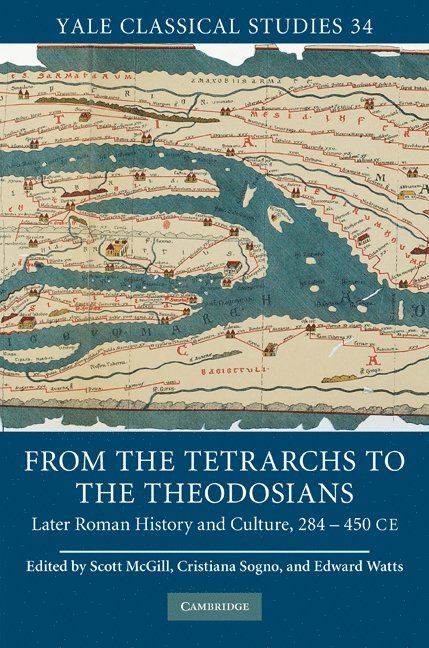
Del 34
From the Tetrarchs to the Theodosians
Scott McGill, Cristiana Sogno, Edward Watts
Inbunden, 2010
2 369 kr
Hoppa över listan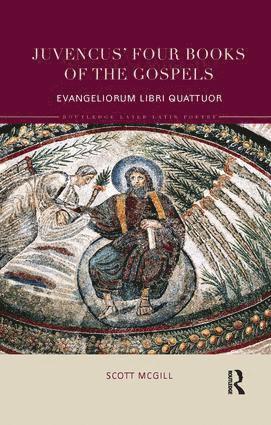
Du kanske också är intresserad av
Del 34
From the Tetrarchs to the Theodosians
Scott McGill, Cristiana Sogno, Edward Watts
Inbunden, 2010
2 369 kr