
Del i serien Elgar Handbooks in Political Science
Handbook on Coalition Politics
Inbunden, Engelska, 2025
5 179 kr
Beställningsvara. Skickas inom 5-8 vardagar. Fri frakt för medlemmar vid köp för minst 249 kr.
This comprehensive Handbook explores how coalition governments function, from their creation to their dissolution, examining the challenges and opportunities they present in modern democracies. Drawing on the latest research, contributing authors outline the impact of institutions, voter behaviour and party dynamics in shaping coalition politics.Leading experts discuss the coalition life cycle, analysing how political parties negotiate to form coalitions, divide responsibilities and spoils of office, govern together and then eventually face decisions about ending their partnership. Chapters investigate empirical findings and case studies from diverse political systems across Europe, and assess the role of coalitions in parliamentary, presidential and semi-presidential systems. They highlight the ways in which methodological innovations including text analysis, agent-based modelling and new statistical techniques have transformed our understanding of coalition politics. Ultimately, the Handbook sheds light on how coalitions are managed in a fragmented political landscape where ideological differences and the rise of populist parties make governing together increasingly complex.Scholars and students of comparative political science, public policy, European and international politics and legislative studies will greatly benefit from this illuminating Handbook. Combining academic theory with real-world practice, it is also a crucial resource for practitioners and policymakers working in regulation and governance, public administration and leadership.
Produktinformation
- Utgivningsdatum2025-11-21
- Mått169 x 244 x undefined mm
- FormatInbunden
- SpråkEngelska
- SerieElgar Handbooks in Political Science
- FörlagEdward Elgar Publishing Ltd
- ISBN9781803929552
Tillhör följande kategorier
Hoppa över listan



Mer från samma författare
Jahrbuch für Handlungs- und Entscheidungstheorie
Susumu Shikano, Behnke Joachim, Thomas Bräuninger
Häftad, 2008
609 kr
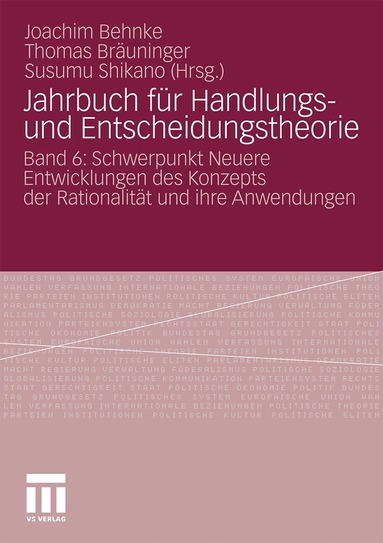
Jahrbuch für Handlungs- und Entscheidungstheorie
Behnke Joachim, Thomas Bräuninger, Susumu Shikano
Häftad, 2010
609 kr
Jahrbuch für Handlungs- und Entscheidungstheorie
Thomas Bräuninger, André Bächtiger, Susumu Shikano
Häftad, 2012
679 kr
Parteienwettbewerb in den deutschen Bundesländern
Thomas Bräuninger, Marc Debus, Jochen Müller, Christian Stecker
Häftad, 2020
749 kr
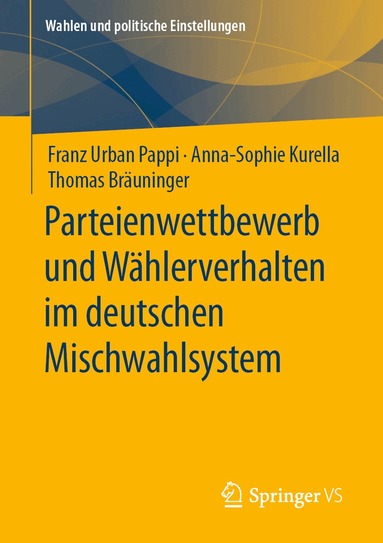
Parteienwettbewerb und Wählerverhalten im deutschen Mischwahlsystem
Franz Urban Pappi, Anna-Sophie Kurella, Thomas Bräuninger
Häftad, 2021
949 kr
Hoppa över listan




Mer från samma serie
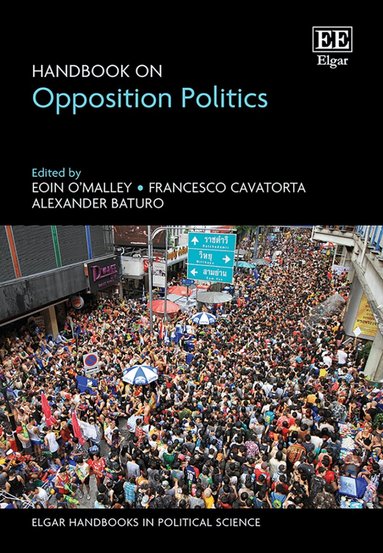
Handbook on Opposition Politics
Eoin O’Malley, Francesco Cavatorta, Alexander Baturo
Inbunden, 2025
4 619 kr
Handbook of Latin American Politics
Claudia N. Avellaneda, Natalie Méndez, Ricardo Bello-Gómez
Inbunden, 2026
7 539 kr
Hoppa över listan



Du kanske också är intresserad av
Parteienwettbewerb in den deutschen Bundesländern
Thomas Bräuninger, Marc Debus, Jochen Müller, Christian Stecker
Häftad, 2020
749 kr
Del 16
Jahrbuch für Handlungs- und Entscheidungstheorie
Jan Sauermann, Markus Tepe, Marc Debus
Häftad, 2022
809 kr
Jahrbuch für Handlungs- und Entscheidungstheorie
Eric Linhart, Marc Debus, Bernhard Kittel
Häftad, 2017
609 kr
Jahrbuch für Handlungs- und Entscheidungstheorie
Susumu Shikano, Behnke Joachim, Thomas Bräuninger
Häftad, 2008
609 kr
Jahrbuch für Handlungs- und Entscheidungstheorie
Thomas Bräuninger, André Bächtiger, Susumu Shikano
Häftad, 2012
679 kr
Parteienwettbewerb und Wählerverhalten im deutschen Mischwahlsystem
Franz Urban Pappi, Anna-Sophie Kurella, Thomas Bräuninger
Häftad, 2021
949 kr
Jahrbuch für Handlungs- und Entscheidungstheorie
Behnke Joachim, Thomas Bräuninger, Susumu Shikano
Häftad, 2010
609 kr