
Geography, Structural Change and Economic Development
Theory and Empirics
Inbunden, Engelska, 2009
3 189 kr
Beställningsvara. Skickas inom 5-8 vardagar. Fri frakt för medlemmar vid köp för minst 249 kr.
The authors in this book regard the process of economic expansion as a non-homogeneous and multifaceted phenomenon, which has deeply affected human welfare, and cultural, social and political change. The book is a bridge between the theorists (Rosenstein-Rodan, Lewis, Myrdal, and Hirschmann) who in the post-war period analyzed regional inequalities, structural change and dualism, and the modern literature on economic growth. The latter has emphasized the existence of multiple equilibria, bifurcations and various types of dynamic complexity, and clarified the conditions for the emergence of phenomena such as cumulative causation, path dependence and hysteresis. These are the typical ingredients of structural change, economic development or underdevelopment.Investigating the 'mechanisms of economic development', this book will be of great interest to researchers and postgraduate students, especially those oriented towards the study of structural and geographical aspects of economic growth and development.
Produktinformation
- Utgivningsdatum2009-02-27
- Mått156 x 234 x undefined mm
- FormatInbunden
- SpråkEngelska
- FörlagEdward Elgar Publishing Ltd
- ISBN9781848442290
Tillhör följande kategorier
Hoppa över listan
Mer från samma författare
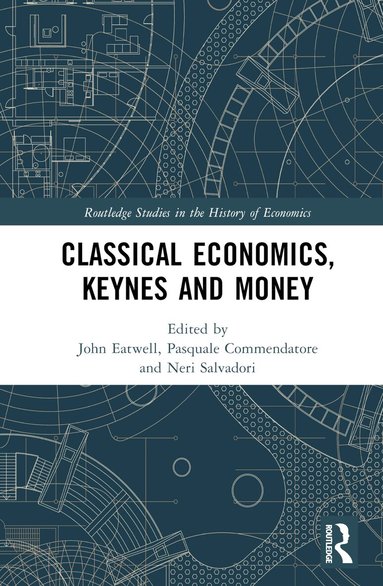
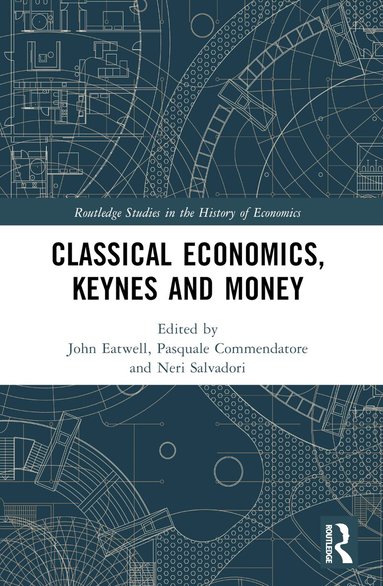
Classical Economics, Keynes and Money
John Eatwell, Pasquale Commendatore, Neri Salvadori
Inbunden, 2022
3 379 kr
Classical Economics, Keynes and Money
John Eatwell, Pasquale Commendatore, Neri Salvadori
Häftad, 2024
929 kr
Competition, Value and Distribution in Classical Economics
Heinz D. Kurz, Neri Salvadori
Inbunden, 2022
3 379 kr
Competition, Value and Distribution in Classical Economics
Heinz D. Kurz, Neri Salvadori
Häftad, 2023
929 kr
Hoppa över listan

Du kanske också är intresserad av
Classical Economics, Keynes and Money
John Eatwell, Pasquale Commendatore, Neri Salvadori
Inbunden, 2022
3 379 kr
Classical Economics, Keynes and Money
John Eatwell, Pasquale Commendatore, Neri Salvadori
Häftad, 2024
929 kr
Economy as a Complex Spatial System
Pasquale Commendatore, Ingrid Kubin, Spiros Bougheas, Alan Kirman, Michael Kopel, Gian Italo Bischi
Inbunden, 2017
749 kr
Del 683
Complex Networks and Dynamics
Pasquale Commendatore, Mariano Matilla-García, Luis M. Varela, Jose S. Cánovas
Häftad, 2016
1 159 kr
Del 19
Complexity and Geographical Economics
Pasquale Commendatore, Saime Kayam, Ingrid Kubin
Inbunden, 2015
1 449 kr
Complexity and Geographical Economics
Pasquale Commendatore, Saime Kayam, Ingrid Kubin
Häftad, 2016
1 869 kr
Del 9
Economy as a Complex Spatial System
Pasquale Commendatore, Ingrid Kubin, Spiros Bougheas, Alan Kirman, Michael Kopel, Gian Italo Bischi
Häftad, 2018
749 kr