
Envisioning Emancipation
Black Americans and the End of Slavery
Inbunden, Engelska, 2012
1 129 kr
Skickas . Fri frakt för medlemmar vid köp för minst 249 kr.
Finns i fler format (1)
The Emancipation Proclamation is one of the most important documents in American history. As we commemorate its 150th anniversary, what do we really know about those who experienced slavery?In their pioneering book, Envisioning Emancipation, renowned photographic historian Deborah Willis and historian of slavery Barbara Krauthamer have amassed 150 photographs-some never before published-from the antebellum days of the 1850s through the New Deal era of the 1930s. The authors vividly display the seismic impact of emancipation on African Americans born before and after the Proclamation, providing a perspective on freedom and slavery and a way to understand the photos as documents of engagement, action, struggle, and aspiration.Envisioning Emancipation illustrates what freedom looked like for black Americans in the Civil War era. From photos of the enslaved on plantations and African American soldiers and camp workers in the Union Army to Juneteenth celebrations, slave reunions, and portraits of black families and workers in the American South, the images in this book challenge perceptions of slavery. They show not only what the subjects emphasized about themselves but also the ways Americans of all colors and genders opposed slavery and marked its end.Filled with powerful images of lives too often ignored or erased from historical records, Envisioning Emancipation provides a new perspective on American culture.
Produktinformation
- Utgivningsdatum2012-12-05
- Mått178 x 254 x 20 mm
- Vikt778 g
- FormatInbunden
- SpråkEngelska
- Antal sidor240
- FörlagTemple University Press,U.S.
- ISBN9781439909850
- UtmärkelserCommended for Black Caucus of the American Library Association Literary_award (Nonfiction) 2014
Tillhör följande kategorier
Hoppa över listan









Mer från samma författare
Photography and the Black Arts Movement, 1955-1985
Philip Brookman, Deborah Willis
Inbunden, 2025
789 kr
Hoppa över listan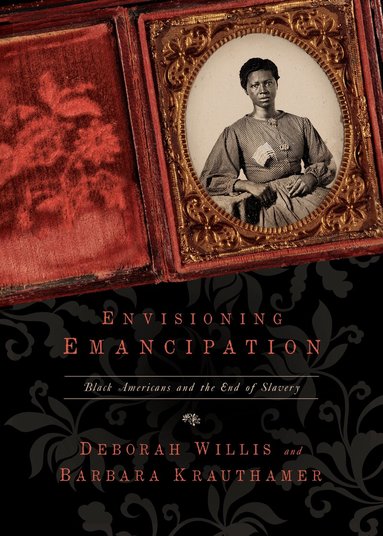






Du kanske också är intresserad av
Major Problems in African American History, Loose-Leaf Version
Barbara Krauthamer, Chad Williams
Häftad, 2017
2 679 kr