
Education and Jobs
Exploring the Gaps
Häftad, Engelska, 2009
569 kr
Beställningsvara. Skickas inom 5-8 vardagar. Fri frakt för medlemmar vid köp för minst 249 kr.
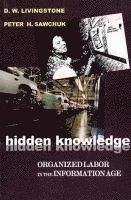
What are the correlations between the education employees bring to their jobs, the education required to do those jobs, and the skills employees acquire while working on the job? Written as a sequel to the critically acclaimed The Education-Jobs Gap, Livingstone and contributors explore these questions by building on earlier research and presenting new labour force surveys and case studies of different economic classes and specific occupational groups. The survey evidence finds an increasingly overqualified non-managerial labour force (especially service sector and industrial workers, recent immigrants, and visible minorities). The case studies of professional employees (teachers and computer programmers), clerical workers, auto workers, and workers with disabilities explore how workers modify these apparent gaps by continuing to learn and reshape their jobs. The book is the most thorough exploration to date of relations between workers and jobs. The Education-Job Requirement Matching (EJRM) Research Project team, including M. Lordan, S. Officer, K.V. Pankhurst, M. Radsma, M. Raykov, J. Weststar, and O. Wilson, worked closely together for several years conducting and analyzing both survey and case study data. The new paradigm they present aims to help reshape future studies of learning and work.
Produktinformation
- Utgivningsdatum2009-09-01
- Mått152 x 229 x 22 mm
- Vikt620 g
- FormatHäftad
- SpråkEngelska
- Antal sidor384
- FörlagUniversity of Toronto Press
- ISBN9781442600508
Tillhör följande kategorier
Hoppa över listan


Mer från samma författare
Public Attitudes Towards Education in Ontario 1998
D. W. Livingstone, D. Hart, Lynn Davie
Häftad, 1999
359 kr
Hoppa över listan





Du kanske också är intresserad av
Public Attitudes Towards Education in Ontario 1998
D. W. Livingstone, D. Hart, Lynn Davie
Häftad, 1999
359 kr
- Nyhet
- Nyhet
Del 6
- Nyhet
Del 3
- Nyhet
Del 11
- Nyhet