
Creation and Performance of Africa’s Security Architecture
- Nyhet
Power, Institutions and Ideas
Inbunden, Engelska, 2026
3 209 kr
Beställningsvara. Skickas inom 10-15 vardagar. Fri frakt för medlemmar vid köp för minst 249 kr.
The establishment of the African Union and its African Peace and Security Architecture (APSA) in 2002 marked a fundamental transformation in how African states collectively address security challenges. This book examines the origins, institutional design, and early performance of APSA, revealing the political dynamics that shaped this landmark initiative in regional security governance.Drawing on extensive elite interviews with key decision-makers, such as former Nigerian President Olusegun Obasanjo, and access to foreign policy documents, this study reconstructs how a coalition of states known as the Like-Minded Five (South Africa, Nigeria, Algeria, Ethiopia, and Mali) exercised disproportionate influence over the creation of APSA. The analysis traces the formation of state preferences, the negotiation process through which diverse visions were reconciled, and the relationship between institutional design choices and subsequent performance. The book challenges the tendency to underestimate the agency of African states in shaping continental institutions and instead demonstrates how domestic political considerations shaped South African and Nigerian preferences, whilst strategic coalition-building and normative entrepreneurship enabled these middle powers to translate their vision into institutional outcomes.Understanding the political bargains struck during APSA's formative period remains essential to understanding security cooperation in Africa and beyond. This book will therefore be an important read for policymakers and for researchers across the fields of African studies, international relations, and security studies.
Produktinformation
- Utgivningsdatum2026-10-08
- Mått156 x 234 x 13 mm
- Vikt540 g
- FormatInbunden
- SpråkEngelska
- SerieRoutledge Studies in Peace, Conflict and Security in Africa
- Antal sidor196
- FörlagTaylor & Francis Ltd
- ISBN9781032169187
Tillhör följande kategorier
Hoppa över listan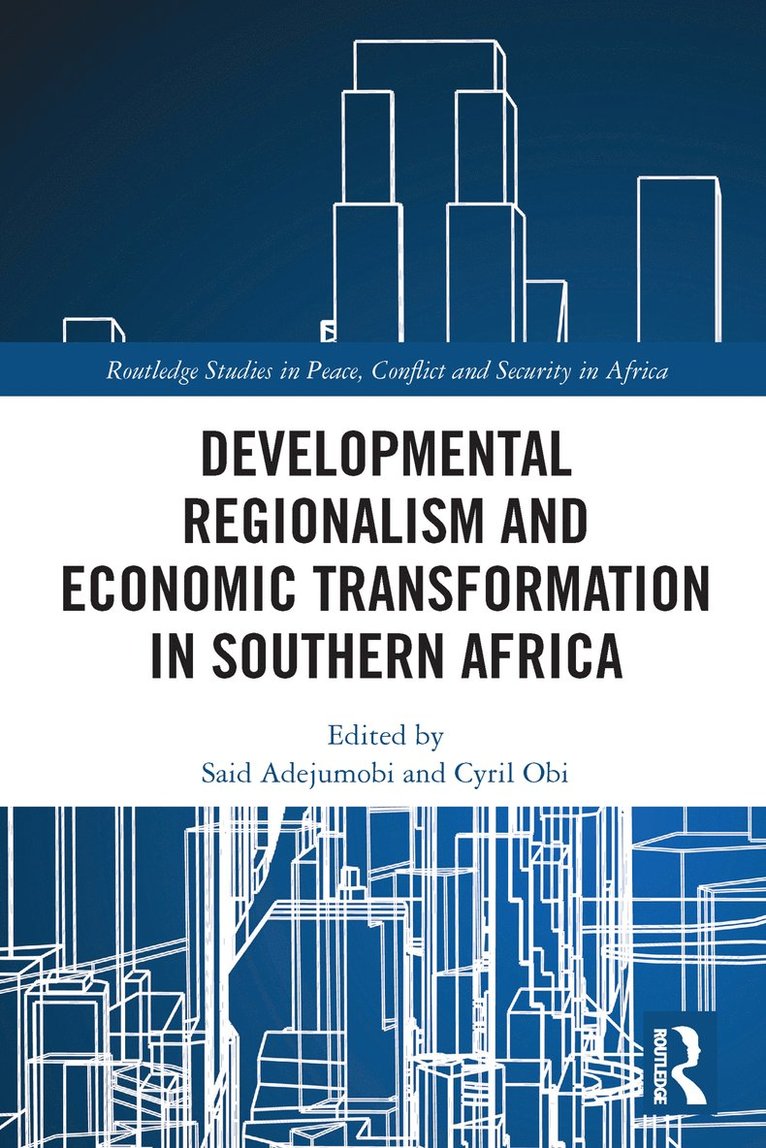



Mer från samma serie
Developmental Regionalism and Economic Transformation in Southern Africa
Said Adejumobi, Cyril Obi
Häftad, 2023
889 kr
Boko Haram’s Terrorist Campaign in Nigeria
Temitope B. Oriola, Freedom Onuoha, Samuel Oyewole
Inbunden, 2021
3 209 kr
Boko Haram’s Terrorist Campaign in Nigeria
Temitope B. Oriola, Freedom Onuoha, Samuel Oyewole
Häftad, 2023
889 kr
Hoppa över listan



Du kanske också är intresserad av
Traditional Authority and Security in Contemporary Nigeria
David Ehrhardt, David Oladimeji Alao, M. Sani Umar
Inbunden, 2023
3 209 kr
- Nyhet
Del 3
Human Security and Sustainable Development in East Africa
Jeremiah O. Asaka, Alice A. Oluoko-Odingo
Häftad, 2024
829 kr