
Community Social Work Practice in an Urban Context
The Potential of a Capacity Enhancement Perspective
Inbunden, Engelska, 1999
2 019 kr
Beställningsvara. Skickas inom 5-8 vardagar. Fri frakt för medlemmar vid köp för minst 249 kr.
Finns i fler format (1)
Community social work practice based on a capacity enhancement model offers tremendous potential for unifying communities consisting of groups from very different cultural backgrounds, and in the process of doing so, make physical changes in the community. Community Social Work Practice in An Urban Context aims to teach graduate students with an emphasis on community and urban social work how to create positive community environments in marginalizedurban-based communities. The use of murals, gardens, playgrounds, and sculptures,f or example provide social workers with an opportunity to identify, engage, and plan services with communities. These projects, inturn, are based upon a community's strengths and represent an effort at developing a community's capacity to help itself with assistance from professionals.
Produktinformation
- Utgivningsdatum1999-10-07
- Mått157 x 231 x 20 mm
- Vikt544 g
- FormatInbunden
- SpråkEngelska
- Antal sidor288
- FörlagOUP USA
- ISBN9780195125467
Tillhör följande kategorier
Hoppa över listan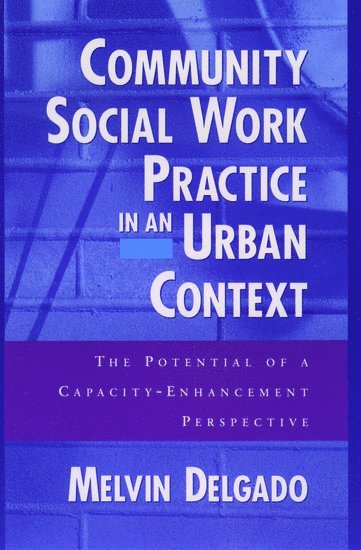








Du kanske också är intresserad av
- Nyhet
Del 3
- Nyhet
- Nyhet
Del 4
- Nyhet
Del 7
- Nyhet
Del 6
- Nyhet
Del 11
- Nyhet
Del 1
- Nyhet