
Del i serien Literatures, Cultures, Translation
Art of Translation in Light of Bakhtin's Re-accentuation
Inbunden, Engelska, 2022
2 089 kr
Beställningsvara. Skickas inom 10-15 vardagar. Fri frakt för medlemmar vid köp för minst 249 kr.
Finns i fler format (1)
Although Mikhail Bakhtin’s study of the novel does not focus in any systematic way on the role that translation plays in the processes of novelistic creation and dissemination, when he does broach the topic he grants translation'a disproportionately significant role in the emergence and constitution of literature. The contributors to this volume, from the US, Hong Kong, Finland, Japan, Spain, Italy, Bangladesh, and Belgium, bring their own polyphonic experiences with the theory and practice of translation to the discussion of Bakhtin’s ideas about this topic, in order to illuminate their relevance to translation studies today. Broadly stated, the essays examine the art of translation as an exercise in a cultural re-accentuation (a transferal of the original text and its characters to the novel soil of a different language and culture, which inevitably leads to the proliferation of multivalent meanings), and to explore the various re-accentuation devices employed over the span of the last 100 years in translating modern texts from one language to another. Through its contributors, The Art of Translation in Light of Bakhtin's Re-accentuation brings together different cultural contexts and disciplines (such as literature, literary theory, the visual arts, pedagogy, translation studies, and philosophy) to demonstrate the continued international relevance of Bakhtin’s ideas to the study of creative practices, broadly understood.
Produktinformation
- Utgivningsdatum2022-11-03
- Mått140 x 216 x 28 mm
- Vikt516 g
- FormatInbunden
- SpråkEngelska
- SerieLiteratures, Cultures, Translation
- Antal sidor304
- FörlagBloomsbury Publishing Plc
- ISBN9781501390234
Tillhör följande kategorier
Hoppa över listan
Mer från samma författare
Cultural Models and Collective Mentalities in Literature, Art, and Philosophy
Slav Gratchev, Valery Chirkov
Inbunden, 2025
1 669 kr
Hoppa över listan
Mer från samma serie
Literary Translation and the Making of Originals
Karen Emmerich, Brian James Baer
Inbunden, 2017
2 919 kr
Hoppa över listan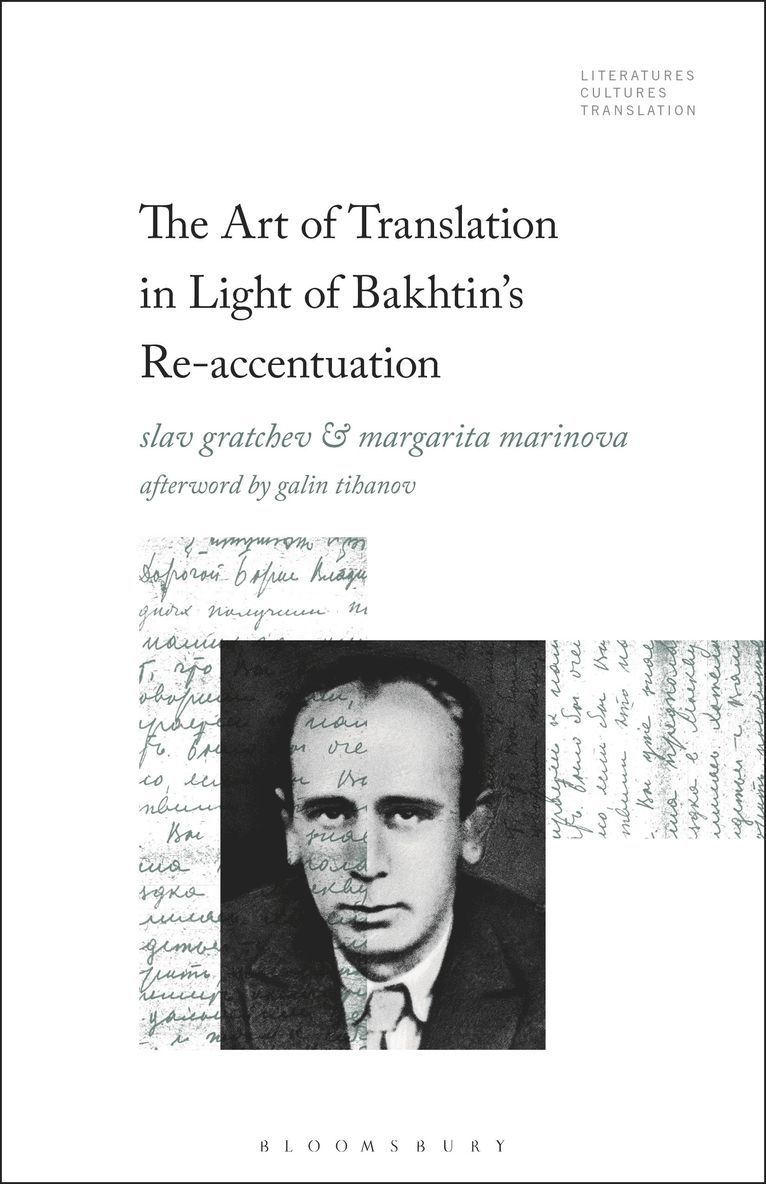



Du kanske också är intresserad av
Art of Translation in Light of Bakhtin's Re-accentuation
Slav Gratchev, Margarita Marinova
Häftad, 2024
629 kr
Cultural Models and Collective Mentalities in Literature, Art, and Philosophy
Slav Gratchev, Valery Chirkov
Inbunden, 2025
1 669 kr
- Nyhet
- Nyhet